10 types of social media posts (and how to use each one well)

The most effective types of social media posts in 2026 are short-form video, talking heads, Stories, images, text, lives, user-generated content, carousels, challenges and collabs.
No single format carries a feed. The brands that hold attention rotate through several, matching the post type to the platform, the audience and the job the content is meant to do.
That’s the real skill here. Not knowing the formats exist, but knowing which one to reach for, when, and where. This guide runs through all ten, what each one is good at, and the platforms where it performs.
The short version:
- Short-form video and UGC do the heaviest lifting for reach and trust; most feeds should lean on them.
- Talking heads, lives and Stories build connection and intent, the harder, more valuable layer.
- Carousels, text and images earn saves and shares when the substance is there.
- Challenges and collabs extend you into other audiences, collabs with the right creator most reliably of all.
The 10 most effective types of social media posts
- Short-form video
- Talking heads
- Stories
- Images
- Text-based
- Lives
- User-generated content (UGC)
- Carousels
- Challenges
- Collabs
Short-form video
Short-form video earns attention because it gets to the point. It makes content easy to consume and rewards a strong idea over a big production budget, which is exactly why it scales.
TikTok, Instagram Reels and YouTube Shorts built the format, and the premium on authenticity over polish means a sharp idea can outperform a glossy one. The barrier isn’t production; it’s having something worth watching. Of every format here, this is the one we’d least expect to fade.
The best platforms for short-form video:
- Instagram Reels
- Facebook Reels
- YouTube Shorts
- TikTok
View this post on Instagram
Talking heads
If short-form video is where you win attention, longer talking-head video is where you turn it into connection. The format is simple, someone speaking to camera, but simple isn’t the same as low-effort. Transitions, pacing and a clear point of view are what separate a watchable talking head from a skippable one.
Done well, talking heads build a community of brand advocates: viewers feel they know the people behind the brand, not just the logo. Open with a hook that stops the scroll, deliver real value through the middle, and close with a clear next step.
The best platforms for talking heads:
- Instagram Reels
- Facebook Reels
- YouTube
- TikTok
View this post on Instagram
Stories
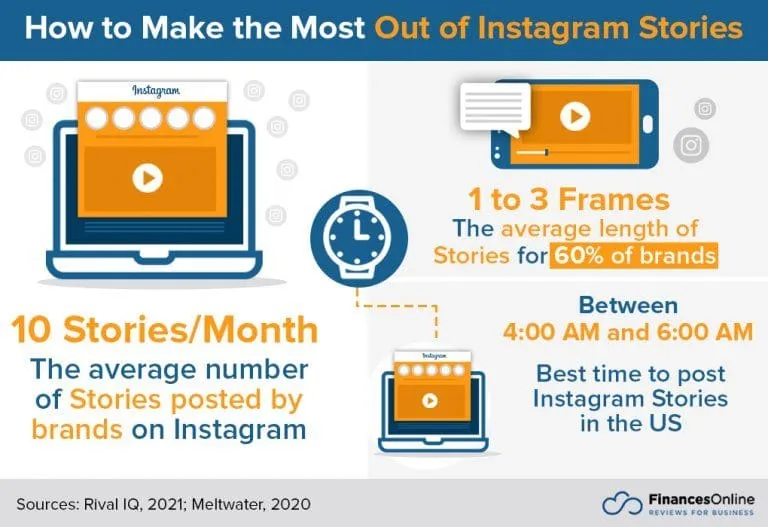
Stories began as a place for unplanned, in-the-moment content. They’ve since become a serious commercial surface, thanks to instant visibility, interactive features and that exclusive, behind-the-scenes feel.
The numbers back it up: Instagram Stories generate around a quarter of the platform’s ad revenue, with Stories ads bringing in roughly $16 billion in global net ad revenues, according to eMarketer. Treat Stories as a channel in their own right, not an afterthought.
The best platforms for Stories:
- TikTok
- Snapchat
Credit: financesonline.com
Images
No rundown of social media post types is complete without the original, the static image. Long before lives, talking heads and Stories, we were sharing photographs. Video has taken ground, but images still hold a serious place in brand marketing.
They’re quick to consume, visually direct, mobile-friendly, accessible and cheap to produce, a reliable way to connect, showcase a product and stop the scroll. The bar is the craft, not the format.
The best platforms for images:
- Snapchat
View this post on Instagram
Text-based
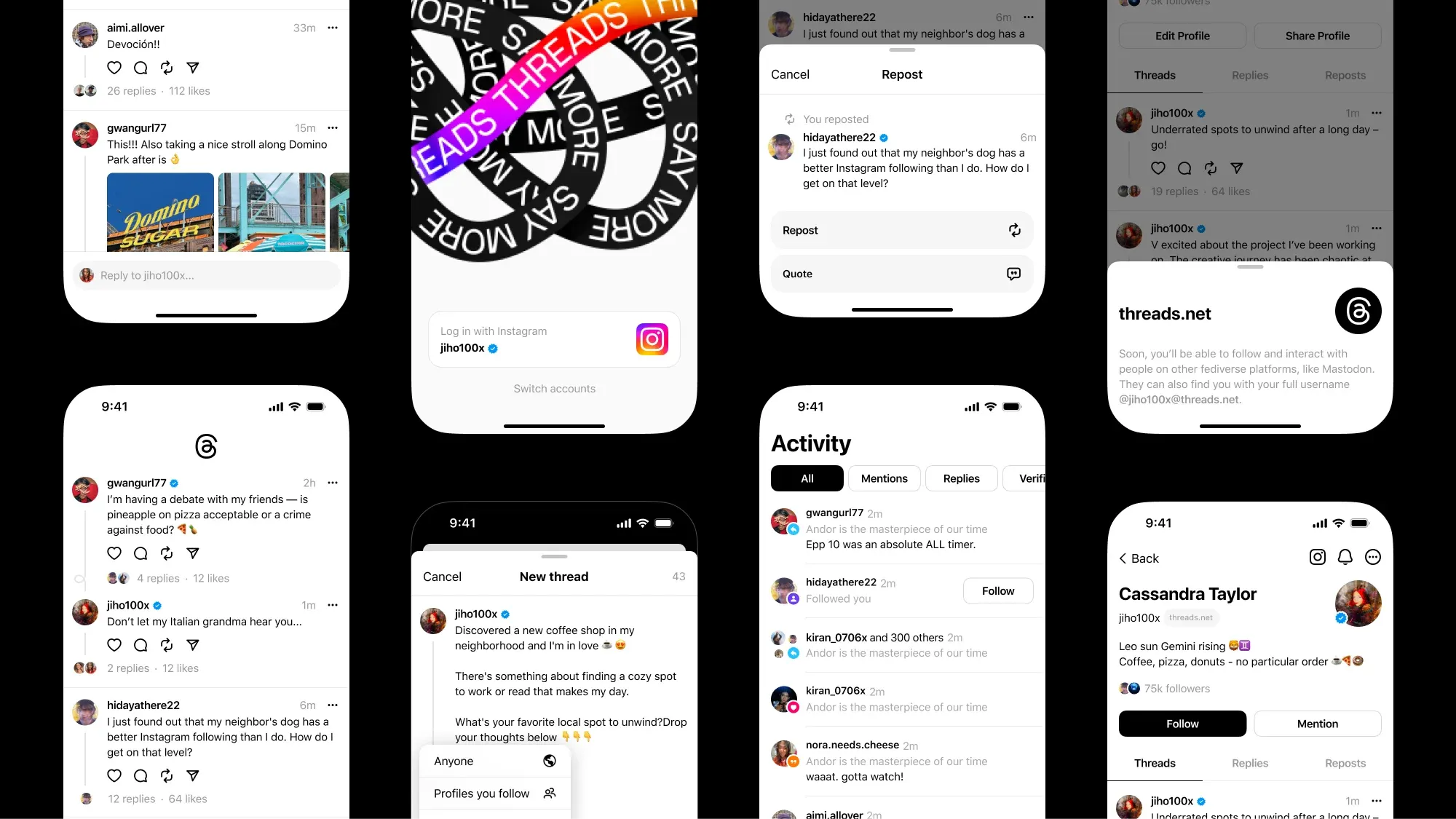
Text posts are the plain biscuit of the feed: a welcome change now and then, dull as a daily diet. Some platforms are built for pure text; on more visual ones, you can turn a strong line into a short text-led video with a tool like Canva.
Done right, text is simple, versatile and capable of carrying a sharp message with no production at all. It invites conversation, communicates directly, and, when the thinking is good, earns follows on the strength of the idea alone.
The best platforms for text-based:
- X (formerly Twitter)
- Threads
Credit: instagram.com
Lives
Live streams connect you directly with your audience, building awareness, deepening loyalty and driving sales in real time. They put the faces behind the brand on screen and open up genuine behind-the-scenes access.
The format is versatile: live Q&As, product demos, storytelling, launches and announcements all work. When audiences feel they have direct access to you, the relationship strengthens, and that sense of community is hard to buy any other way.
The best platforms for lives:
- TikTok
- YouTube
User-generated content (UGC)
User-generated content is content made by people other than the brand. It’s one of the most effective ways to show, authentically, that a product is worth buying, without the brand having to make the claim itself.
Audiences read UGC as trustworthy precisely because it isn’t the brand talking. When real people share how good something is, it builds credibility and moves people closer to a purchase. The most consistent way to scale this signal is to treat creators as an ongoing part of how your brand shows up, not a one-off tactic.
The best platforms for UGC:
- TikTok
- YouTube
Carousels
Carousels are binge-worthy, digestible and built for depth: around 19% of Instagram posts are carousels, and they consistently earn strong saves and shares.
This modern take on the image-and-text post is made for step-by-step guides, feature breakdowns and the slow reveal. Telling a story across multiple slides keeps people swiping, and you can tailor each carousel to a specific audience segment for sharper relevance.
The best platforms for carousels:
- TikTok
Challenges
Remember the ice bucket challenge? It raised an incredible $220m worldwide, because friends nominated friends, it was easy to join, and it was fun to watch. Challenge-based posts spread fast, lift brand visibility, and rally an audience behind a single idea.
Challenges don’t require everyone to do exactly the same thing. With one clear concept or hashtag, Calvin Klein’s #onlyinmycalvins is the classic, you can prompt a wave of creative, user-made content that carries the brand far beyond its own feed.
The best platforms for challenges:
- TikTok
@calvinklein You all BROUGHT IT to the #onlyinmycalvins challenge 😍📸 #calvinklein ♬ Only In My Calvins – Calvin Klein
Collabs
Collaborating with a creator is one of the most reliable ways to reach a new audience, build credibility and drive sales, because you’re borrowing trust that’s already been earned. Creators have built loyal, engaged communities that act on their recommendations, so the right partner does more than extend reach; they lend relevance.
Collab posts are versatile: long campaigns or one-offs, images, short-form video or talking heads. The advantage is in the name. You tap into what a creator already knows works for their audience and build the content together. Get the match right and a collab compounds; get it wrong and it’s just a borrowed post that doesn’t fit.
The best platforms for collabs:
- TikTok
- YouTube
How to use different social media post types effectively
- Understand your audience. Different formats resonate with different people. Be clear on who each piece of content is for, then choose the post type most likely to land with them.
- Measure what actually performs. Track each post against the outcome you wanted, not just likes. Feed those signals back into what you make next.
- Treat your feed as a system, not a lottery. What works this month may fade the next, so build a repeatable mix of formats and keep testing at the edges. The brands that win on social aren’t guessing post by post; they’re running a system that learns.
How we see it: format variety is table stakes. The harder, more valuable problem is making the mix work together, so each post type feeds the next and influence compounds across your whole presence instead of resetting with every upload.
FAQs
What is the most effective type of social media post?
There’s no single winner. It depends on the goal. Short-form video and UGC tend to drive the most reach and trust, talking heads and lives build connection, and collabs with the right creator extend you into new audiences fastest. The strongest strategies blend several rather than betting on one.
How many types of social media posts should a brand use?
Most brands should rotate through a handful rather than commit to one. A working mix usually pairs a high-reach format (short-form video, UGC) with a connection format (talking heads, Stories, lives) and a depth format (carousels, text). Match each to the platform where it performs best.
Which social media post type is best for engagement?
Carousels and short-form video typically earn the most saves, shares and comments, because they reward genuine substance and keep people interacting. But engagement follows the idea, not the format. A weak concept underperforms in any wrapper.
A mix of formats fills the feed. A system makes it perform.
Knowing the ten post types and where to use them is the easy part. The harder, more valuable work is turning a scattered content calendar into a system, one where creators, formats and platforms reinforce each other and influence builds over time instead of resetting with every post.
That’s the work we do. Vamp is a tech-enabled influencer marketing agency: we design creator-led growth systems and build the content engines behind them, so attention turns into measurable growth rather than a feed that’s merely busy. Talk to us.