Social media for small business: a practical guide

Social media for a small business comes down to one decision: pick the right platforms, post consistently, and measure what works.
You don’t need to be everywhere. You need to be in the few places your customers already are, with content you can sustain. Most small businesses fail at social not because they post the wrong thing, but because they spread themselves across seven channels and run out of energy by week three.
This guide keeps it realistic. Which platforms to choose, what to post, how often, and how to turn it into a simple strategy you can actually keep up, without it taking over your week.
The short version:
- Choose one or two platforms where your audience already spends time. Depth beats spread.
- Consistency matters more than hitting a “perfect” posting frequency.
- Match the content to the platform: image-led on Instagram and Pinterest, video on TikTok and YouTube, conversation on X and LinkedIn.
- Plan and schedule in advance so daily posting doesn’t become a daily scramble.
- Measure against clear goals, awareness, traffic or sales, not vanity reach.
According to Sprout Social, people spend a meaningful chunk of every day on social and move between several platforms each month. That fragmentation is exactly why focus wins: trying to cover every channel lightly is how small teams burn out and show up nowhere convincingly.
What social media platforms should a small business use?
The secret to small business social media is picking the right platforms, not all of them. Each one has a distinct audience, so choosing the channels your target customers already use means you reach the right people and save yourself a lot of wasted effort. Focusing your time and resource on one or two key channels almost always beats doing a little on each.
Here’s a quick rundown of the major platforms and who they reach. Use it to shortlist, not to spread yourself across all of them.
Facebook remains one of the largest social platforms in the world, though growth has flattened as younger users gravitate to TikTok and Snapchat.
- Largest age group: 25–44
- Best for: reaching an older audience and running geographically targeted ads
How we’d play it – Facebook skews older than most platforms, which makes it strong for reaching people over 35 and for local advertising. Posts perform best with an image, and the occasional video helps. Aim for steady, regular posting over volume.
Instagram is image- and video-led, with a core audience of Gen Z and Millennials. If you can’t always shoot your own content, lean on free stock photos and footage and get your dimensions right with our guide to social media image sizes.
- Largest age group: 18–34
- Best for: visually driven brands targeting younger audiences
How we’d play it – three to five posts a week is a sustainable rhythm. Image and video quality carry the platform, so it’s worth learning how to take good photos for Instagram. Reels reach further than static posts, so prioritise short video where you can.
TikTok
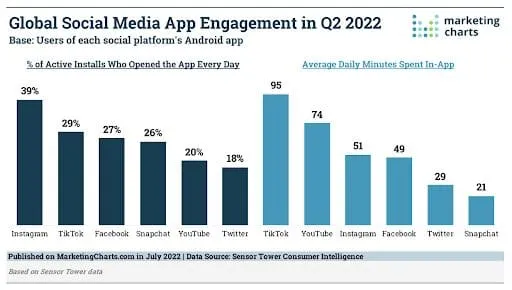
TikTok keeps adding tools that make it more useful for small businesses, from improved ad formats to CRM integrations. Users spend more time here than on almost any other app.
- Largest age group: 18–34
- Best for: creative, personality-led short video on a modest budget
How we’d play it – you don’t need a big budget to do well here; you need ideas and consistency. The format is video only, so the brief is simple: be creative, be quick, have fun. Three to five posts a week works, and the in-app editing tools are good enough to make on a phone.
X (formerly Twitter)
X is where people go to follow what’s happening right now, which makes it strong for news, commentary and real-time conversation.
- Largest age group: 18–34
- Best for: conversation, timely commentary and reaching high-intent audiences
How we’d play it – the platform rewards engagement, not broadcasting. Reply, join conversations, and use a focused set of hashtags so the right people find you. It’s a high-frequency channel, several posts a day, so only commit if you can keep the pace.
A professional network and the default platform for B2B marketing and lead generation.
- Largest age group: 30–44
- Best for: B2B, recruitment and thought leadership
How we’d play it – only invest here if your customers are other businesses or professionals. One to two posts a day is plenty. Vary the format: longer articles, short video, polls, and the occasional share of a credible voice in your field.
Pinterest is highly product-focused and functions as a visual search engine. Its audience skews female and shops frequently.
- Largest age group: 25–44
- Best for: product discovery and driving traffic to ecommerce
How we’d play it – this is image-led and low-frequency; once a week can be enough. Before committing, make sure you have a steady supply of high-quality images and decide whether you want to sell directly through the platform, as a large share of users shop regularly.
Snapchat
Popular with younger users and a useful place for spotting emerging trends.
- Largest age group: 18–24
- Best for: reaching Gen Z with playful, of-the-moment content
How we’d play it – authenticity beats polish here. Stories disappear after 24 hours, so content needs to be quick to make and genuinely creative. Only set up a business account if you can commit to producing that kind of content regularly.
YouTube
Second only to TikTok for time spent, YouTube is the home of long-form video, but most users come for entertainment, not to discover brands.
- Largest age group: 15–35
- Best for: long-form video, tutorials and building a searchable content library
How we’d play it – you set the schedule and stick to it, but the bar for video quality is higher than on short-form platforms. Before launching a channel, ask whether you can commit to regular video and whether you have something genuinely worth saying. If you’re weighing the effort against return, our breakdown of how much YouTube pays is a useful gut-check.
Still deciding where to focus? Our guide to choosing the right social media channels goes deeper on the trade-offs. And whichever you pick, remember: being consistent matters more than hitting a “perfect” posting frequency.
What can social media do for a small business?
Your customers already spend a significant part of every day on their phones, much of it inside social apps. That’s a captive audience and a low-cost way to introduce people to your brand, provided you show up where they already are.
It’s also an expectation. Consumers increasingly assume credible brands have a social presence; an empty or missing profile can read as a red flag when someone is deciding whether to trust you.
If you want to go beyond posting and into creator-led growth, our guide to influencer marketing strategy is the next step up.
What should a small business post on social media?
Start from your goals and work back to a content mix. Hootsuite suggests a rough split, for example, a portion of posts driving website traffic, a portion curated from elsewhere, a portion built around lead generation like newsletter sign-ups, and a smaller slice promoting the brand directly. The exact ratios matter less than having a deliberate balance rather than posting on instinct.
For the bigger picture, our social media strategy guide covers how to set that up, and the right social media scheduling tools make the execution lighter.
How do I create a social media plan for my small business?
If daily posting feels overwhelming, the fix is simple: don’t do it in real time. Plan and create posts in advance, then schedule them with tools like Buffer or Tailwind, both of which include a content planner. Working from a content calendar lets you map out a month at a time and post deliberately rather than reactively.
For the full toolkit, see our guide to social media management tools and our rundown of social media analytics, which show how your content is actually performing. To close the loop on results, the guide to social media monitoring tools covers how to track what people are saying.
What social media is best for a local business?
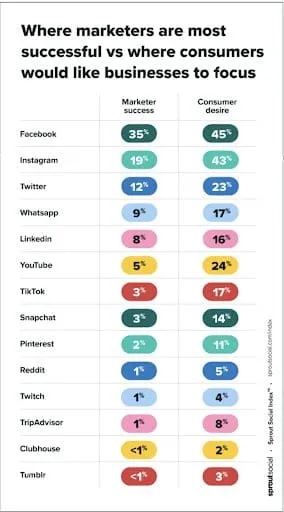
Facebook is a sensible starting point for local businesses. It’s widely used across age groups, and its paid advertising lets you target people within a specific geographic area, useful when your customers are within driving distance.
It’s also one of the platforms where digital marketing tends to perform best, with audiences actively open to discovering new local brands and products. As every business is different, test posting at different times and frequencies to find what works for yours.
How to build a social media strategy for a small business
A workable strategy comes down to five steps. None of them require a big budget, just a bit of upfront thinking.
- Write down your goals. Be specific. More website traffic? More followers? More enquiries? You can’t measure success against a goal you never set.
- Define your audience. How old are they, where do they live, what do they earn, what do they care about? The clearer the picture, the easier every other decision becomes.
- Find where they spend time. Research what your customers talk about online and which platforms they actually use, then commit to those, not the ones you personally prefer.
- Create content worth engaging with. Tie it to your goals, keep it native to each platform, and don’t be afraid to experiment with formats.
- Measure and adjust. Use analytics to see what’s landing, double down on it, and quietly retire what isn’t.
One thing that’s easy to skip and costly to ignore: customer service. Respond to questions and resolve problems quickly. If you can’t keep up across multiple channels, that’s your signal to focus on one or two and do them properly.
How we see it
Most small-business advice treats social media as a checklist of platforms and posting frequencies. Useful as a starting point, but the brands that compound are the ones that treat influence as a system, not a series of one-off posts. Consistency, the right voice, and content that earns participation (comments, shares, saves) beat raw reach every time. The platforms and tactics change. The discipline of showing up deliberately, measuring honestly, and building relationships over time does not.
Social media for small businesses: FAQs
How can small businesses measure the success of their social media?
Start with clear goals tied to business objectives, then track the metrics that match them. For awareness, watch follower growth, impressions and reach. For engagement, track comments, shares, saves and direct messages. These signal genuine interest, not just exposure. For conversions, focus on click-through rates, social-driven website traffic, and the sign-ups or sales that originate from social. Native tools like Meta and X analytics give you a baseline; pairing them with Google Analytics and UTM codes on your links shows exactly which posts drove which actions. Consistency is the key, check regularly and adjust.
How do you create engaging content on a limited budget?
Lean on what you already have. User-generated content, customers sharing photos or videos of your product, reposted with permission, builds trust and costs nothing to produce. Free design tools like Canva handle the visuals, and native features like Reels and TikTok’s editor make short-form video easy. Repurpose relentlessly: one blog post can become several posts, clips or infographics. Above all, tell real stories about your brand, team and customers; authentic and relatable usually outperforms polished and impersonal.
How can a small business manage social media with limited time?
Plan ahead. A content calendar and a scheduling tool let you batch a week or month of posts in one sitting instead of scrambling daily. Prioritise the one or two platforms where your audience is most active rather than spreading thin. Favour formats with the best effort-to-impact ratio. Short video shot on a phone often outperforms a heavily produced post. Set aside 10–15 minutes a day for replies and messages, and consider outsourcing design or editing to a freelancer so you can focus on strategy and the conversations that matter.
When posting becomes a growth system
Getting the platforms, cadence and content right is the foundation, and for most small businesses, it’s enough to build real momentum. The harder, more valuable problem is turning that activity into compounding growth: the right creators, the right partnerships, and a system that keeps performing as you scale.
That’s the work we do. Vamp is a tech-enabled influencer marketing agency. We design creator-led growth systems for brands ready to move from posting to performance. When you’re ready for that step, talk to us.