How much does YouTube pay? Creator earnings explained

How much does YouTube pay? Most creators earn roughly $3 to $5 for every 1,000 video views from ads alone, but ad revenue is the floor, not the ceiling.
That headline number is where almost every creator starts, and it’s where most stop thinking. The creators who actually build an income on YouTube treat ad revenue as one stream among several: sponsorships, affiliates, merchandise, memberships and fan funding usually earn far more than the ads ever will.
This guide breaks down what YouTube pays per view, what you need to qualify, and the routes that turn a channel into a business.
The short version:
- Ad revenue: about $3–$5 per 1,000 views once you’re monetised. A single view earns roughly $0.003–$0.005.
- The threshold: you need 1,000 subscribers and 4,000 public watch hours (or 10M Shorts views) to join the YouTube Partner Program.
- The real money: sponsorships, affiliates, merch and memberships typically out-earn ads many times over.
- The variable that matters most: your niche. Finance, tech and education command far higher ad rates than entertainment.
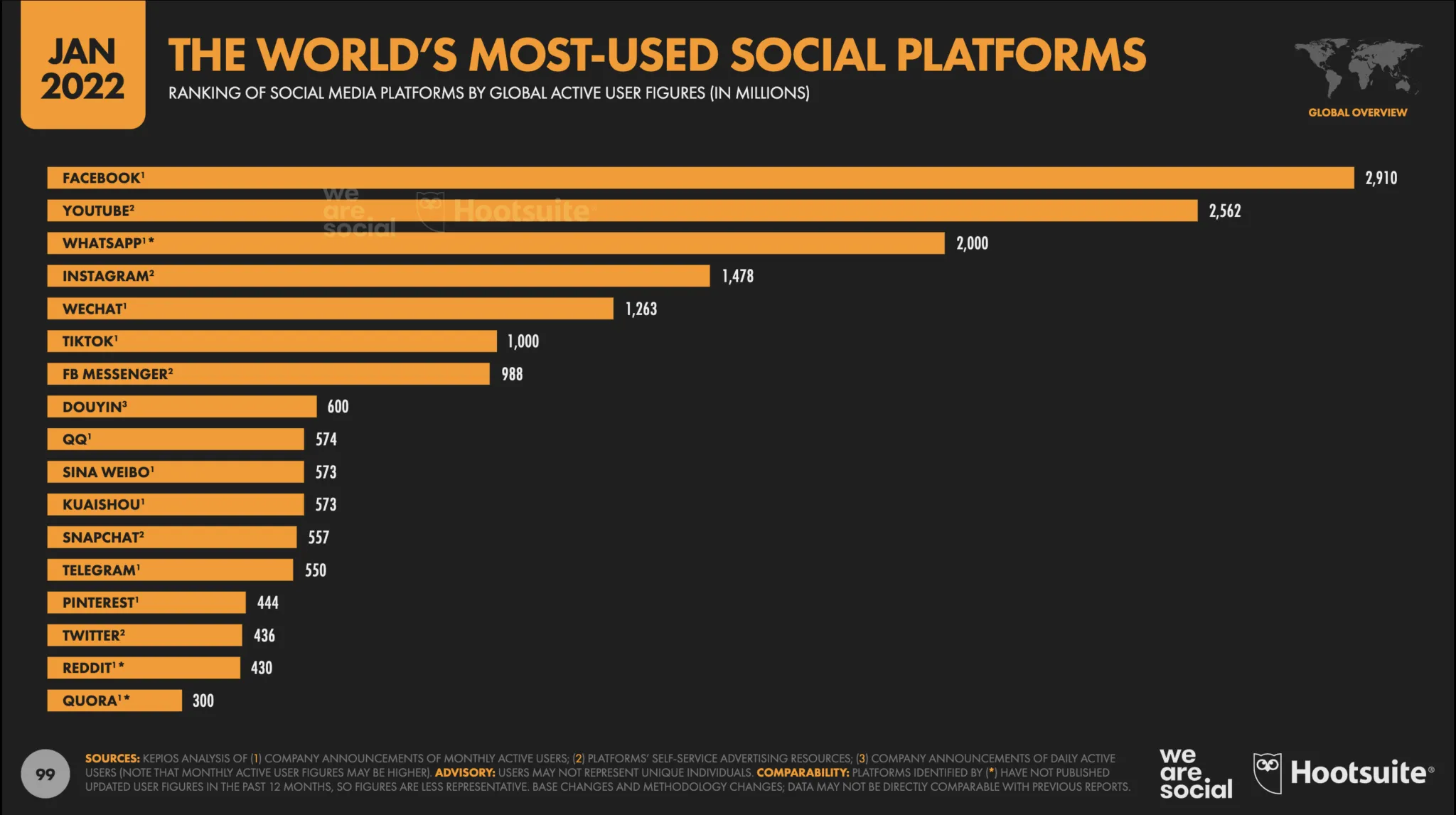
Image credit: Digital Global Overview Report | Hootsuite and We Are Social
How does YouTube pay creators?
Most YouTubers earn their first money through ads, and YouTube pays for them in two ways: cost per thousand views (CPM) and cost per click (CPC).
The majority are CPC ads. A viewer has to click for the creator to earn. Google pays creators 68% of AdSense revenue, so if an advertiser pays Google $100, $68 goes to you. The rate per ad view typically falls between $0.10 and $0.30, averaging around $0.18.
How much does YouTube pay per view?
Ad views and video views are not the same thing, and the gap is where most earnings estimates go wrong.
Not every video view becomes an ad view. A large share of viewers run ad blockers, and many skip or click away before an ad counts. So while ad views average around $0.18, the blended rate across all your video views lands much lower, roughly $0.003 to $0.005 per view.
In practice, that’s why 1,000 video views earns most creators between $3 and $5 from ads.
How many views do you need to get paid on YouTube?
Views alone don’t unlock payment. First you have to be accepted into the YouTube Partner Program (YPP), which currently requires you to:
- Have at least 1,000 subscribers
- Have 4,000 valid public watch hours in the past 12 months, or 10 million valid public Shorts views in the past 90 days
- Live in a country or region where YPP is available
- Have a linked AdSense account and follow YouTube’s monetisation policies
Subscribers don’t automatically translate into views. You build both by posting consistently and giving an audience a reason to come back. That rapport is what turns a one-off viewer into someone who watches, subscribes and engages with your ads.
Once you’re in the YPP, expect roughly $3–$5 per 1,000 views from ads. Everything above that comes from the monetisation routes below.
How much money can you make on YouTube?
Like any business, earning on YouTube takes time. Plenty of channels make little or nothing; a handful make millions. The spread is enormous, and it’s driven by consistency, originality and niche.
MrBeast is the obvious ceiling, now the most-subscribed individual creator on the platform, with hundreds of millions of subscribers and tens of millions of views per video. His earnings run into the tens of millions a year, and almost none of it is ad revenue alone; it’s brand deals, his own products and ventures built on top of the audience.
That’s the pattern worth noticing. The biggest YouTube incomes aren’t bigger ad cheques. They’re businesses built on owned audiences and private creator communities, the mailing lists, memberships and direct channels that keep earning when the algorithm changes.
Your niche shapes how fast you get there. Music, entertainment and how-to tutorials pull large audiences and surface easily in search, which helps discovery. But as you’ll see below, the niches that draw the largest audiences aren’t always the ones that pay the highest rates.
How much does YouTube pay for 1,000 views?
About $3 to $5, provided ads are enabled and your audience engages with them.
How much does YouTube pay for 10,000 views?
Following the same rate, roughly $30 to $50, depending on how much your audience interacts with the ads.
How much does YouTube pay for 1,000,000 views?
At around $0.003–$0.005 per view, a million views earns roughly $3,000 to $5,000 in ad revenue. The exact figure varies widely with niche and ad engagement. A low-paying niche might see closer to $1,000.
How much money is a billion views on YouTube?
A billion views means you either have a very large channel or a video that’s travelled a long way, usually both. Ad revenue alone might range from $100,000 to $500,000 depending on how well the ads perform. At that scale, though, sponsorships, products and brand partnerships almost always earn more than the ads.
How do YouTubers make money beyond ads?
Ad revenue is the entry point, not the destination. The creators who earn a living diversify early. Here are the main routes.
Affiliate marketing
Affiliate marketing pays you a cut when a viewer buys through your link. Find brands you genuinely use and that fit your niche, arrange an affiliate link, and add it to your videos and descriptions. Every purchase through that link earns you a commission, and recommendations land harder when the audience trusts that you actually use the product.
Selling merchandise and digital products
Branded merch, print-on-demand t-shirts, mugs, prints, needs little ongoing input once it’s set up. Digital products scale even better: courses, ebooks, presets or gated content have no unit limit and no inventory. For an established channel, your own products are often the highest-margin income you have.
Fan funding and memberships
With a committed audience, you can earn directly from fans. YouTube’s own tools include Super Thanks, Super Chat, Super Stickers and Channel Memberships, plus monetisation built into Shorts. Many creators also use external platforms like Buy Me a Coffee, Ko-fi or Patreon. All of it depends on the same thing: a real relationship with your audience.
Brand sponsorships
For most mid-sized and larger creators, sponsored content is the single biggest earner, and the rate isn’t tied to a per-view formula. It’s tied to how relevant and trusted your audience is to a brand, which is why the more ambitious creator partnership models share the upside rather than pricing a single post. A channel with 50,000 highly engaged niche viewers can command more per video than a general-entertainment channel ten times its size, because the brand is paying for fit, not just reach. This is where understanding your own audience pays off most directly.
Does YouTube pay for premium subscriptions?
Yes. YouTube Premium lets viewers watch ad-free, and YouTube shares that subscription revenue with creators. How much you earn depends on how much Premium members watch your content, so a loyal, high-watch-time audience earns on both sides: from ads when non-members watch, and from the Premium pool when members do.
Which niches pay the most on YouTube?
Two channels with identical view counts can earn very different amounts, because advertisers pay more to reach some audiences than others. CPM rates climb with the commercial value of the viewer.
The consistently higher-paying niches:
- Finance and investment: personal finance, investing and related topics attract some of the highest CPMs, because financial brands pay a premium for that audience.
- Technology: reviews, tutorials and unboxings draw well-funded ads from tech companies.
- Business and marketing: B2B and software advertisers compete for a high-intent, high-value audience.
- Health and wellness: fitness, nutrition and wellbeing content attracts strong rates from lifestyle and health brands.
- Education: tutorials, how-to guides and language learning earn high CPMs because advertisers value informative, evergreen content.
The pattern: niches that reach audiences with specialised interests or higher spending power command higher ad rates. A smaller channel in a high-CPM niche can out-earn a much larger one in a low-CPM category.
How much money does YouTube itself make?
Context for the cut you receive: YouTube is a major advertising business in its own right, generating tens of billions of dollars a year in ad revenue, with billions more from YouTube Premium and Music subscriptions. Creator payouts come out of that pool, which is why platform-wide changes to ad demand and Premium uptake ripple straight through to what individual creators earn.
How we see it
Here’s the shift worth internalising: ad revenue pays you for views, but everything that earns more pays you for relevance. Sponsorships, affiliates, products and memberships all reward the same thing: a clear niche and an audience that trusts you. View count is the vanity number. The depth of your relationship with a specific audience is the asset.
That’s the difference between a channel that earns pocket money and one that earns a living. Chase reach and you’re competing on a per-view rate set by advertisers. Build genuine relevance with a defined audience and you set your own rate, because that’s what brands actually pay for.
At Vamp, we’re a tech-enabled influencer marketing agency: we connect brands with creators and build the systems behind creator-led growth. We see, from the brand side, exactly which creators get paid well and why, and it’s almost never the ones with the biggest numbers. It’s the ones whose audience and content fit a brand so precisely that the partnership performs.
FAQs
How does YouTube pay compare to TikTok and Instagram for creators?
Each platform monetises differently. YouTube pays mainly through ads (via the Partner Program), plus memberships, Super Chats, Premium revenue-sharing and merch. It has the strongest long-term, ad-driven earning potential. TikTok relies more on its Creator Rewards programme, brand partnerships and live-stream gifts, rewarding fast engagement. Instagram monetises through sponsored posts, affiliate links, branded content and shopping features built into Reels and stories. In short: YouTube for durable ad income, TikTok for rapid reach, Instagram for visual sponsorships and commerce. Most full-time creators earn across more than one.
How long does it take to start earning on YouTube?
For most creators, the first money is a year or more away. You typically can’t monetise until you’ve hit 1,000 subscribers and 4,000 watch hours (or 10M Shorts views), and reaching that usually takes consistent posting over many months. Treat the first year as audience-building, not income.
Do more subscribers mean more money?
Not directly. You earn from views, watch time and ad engagement, not from subscriber count itself. A smaller channel with a loyal, high-intent audience in a high-CPM niche can out-earn a much larger channel with passive viewers. Engagement and relevance beat raw subscriber numbers.
What’s the fastest way to increase YouTube earnings?
Diversify beyond ads. Add affiliate links, sponsorships and your own products or memberships, and double down on a defined niche so your audience becomes genuinely valuable to advertisers and brand partners. Per-view ad revenue is the slowest lever to move; audience relevance is the fastest.