Reels vs TikTok in 2026: key similarities and differences
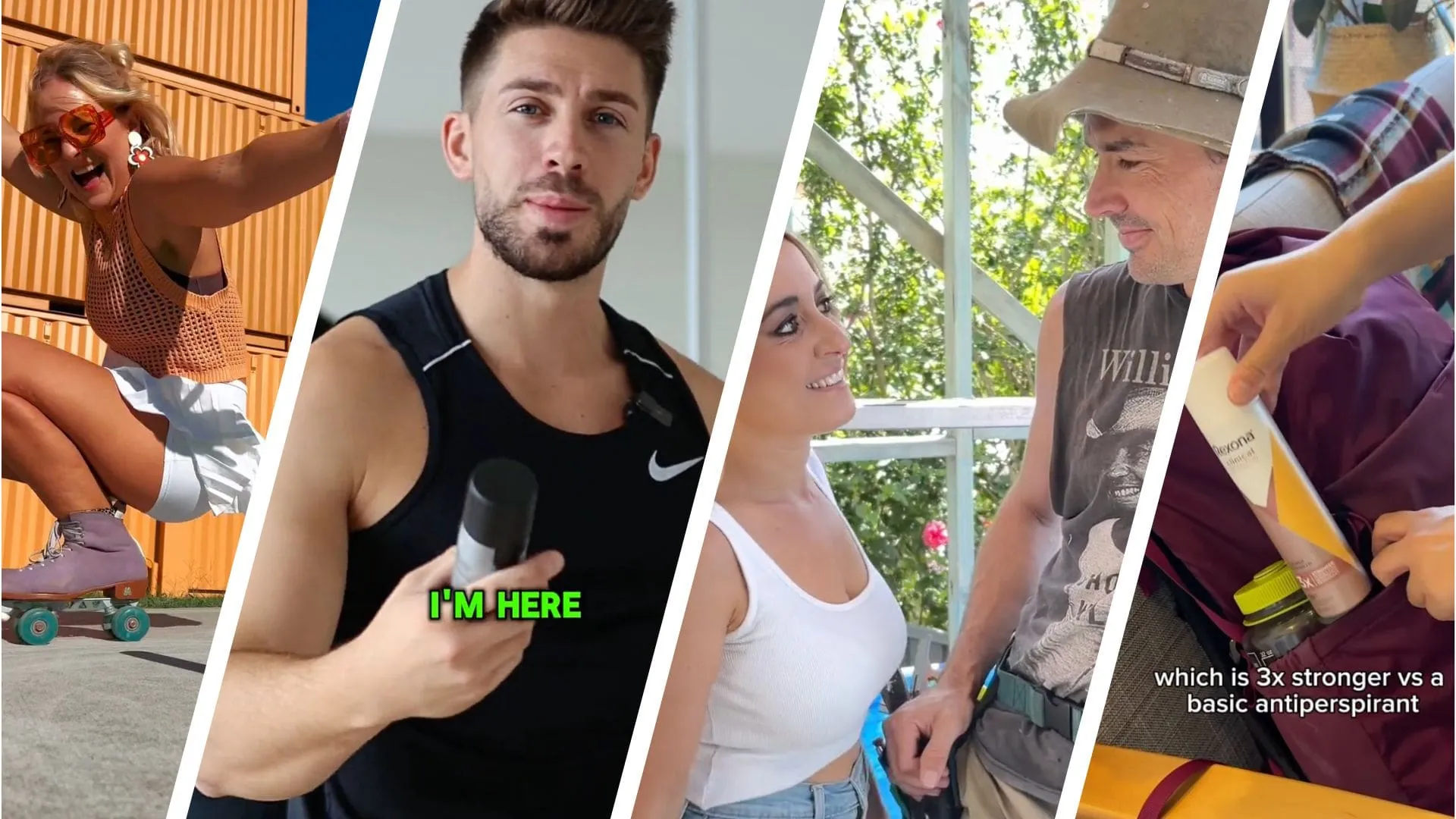
Instagram Reels and TikTok are both short-form vertical video platforms that now share most of their core features: music libraries, editing tools, discovery feeds, and shoppable content. The real difference in 2026 is strategic, not technical. TikTok’s algorithm still favours raw discovery and viral reach from unknown accounts; Reels leans on Instagram’s broader demographic base and stronger purchase-intent signals. Both carry videos of 3+ minutes, both offer robust analytics, and both pay creators, but each rewards a different content strategy.
Short-form video is the dominant format across social, and the contest between TikTok and Reels has only intensified since Reels launched in August 2020. TikTok now has roughly 1.9 billion monthly active users globally; Instagram has surpassed 3 billion, with over 2 billion of those engaging with Reels every month.
Meta has spent the years since closing the gaps. The editing, collaboration and commerce features that once set TikTok apart are now matched or countered. So the question was never which platform is “better”. It’s which one fits the role you need it to play.
The short version:
- Same format, different machine. Both are vertical short-form video with near-identical toolsets. The divergence is in the algorithms and the audiences behind them.
- TikTok is built for discovery. Its For You Page surfaces content with little regard for follower count, so unknown accounts can still reach millions.
- Reels is built for conversion. Instagram’s larger, higher-purchase-intent audience and brand-partnership tooling make it the stronger commerce surface.
- The smart move isn’t either/or. Treat them as two stages of one system, TikTok for awareness, Reels for conversion, and let your own campaign data settle the rest.
How big is TikTok vs Reels in 2026?
The user numbers tell a story of convergence. TikTok has roughly doubled its user base since 2021, reaching approximately 1.9 billion monthly active users by early 2026. Instagram surpassed 3 billion MAU in September 2025, with over 2 billion users engaging with Reels monthly.
In Australia, Instagram leads with 14–15 million users compared to TikTok’s 8–11 million (ages 18+). In the UK, Instagram reaches 33–35 million versus TikTok’s 25–27 million. However, TikTok dominates time spent in both markets. Australians average roughly 42 hours per month on TikTok, while UK users spend close to 50 hours monthly.
The biggest demographic shift since 2021: both platforms’ largest user group is now 25–34 year olds, not teenagers. The 35+ segment is the fastest-growing cohort on both platforms, which matters for brands targeting beyond Gen Z.
Engagement rates remain TikTok’s strongest advantage when measured per follower, at roughly 2.5–3.7% versus Reels’ 0.50–0.65%. But this partly reflects TikTok’s algorithm surfacing content to wider audiences. When measured per reach (how many viewers who actually see the content engage with it), the platforms are closer: Instagram at around 5.5% versus TikTok at 4.5%.
What do Reels and TikTok have in common?
Despite their different origins, the two platforms share more similarities today than at any point since Reels launched.
Short-form vertical video. Both are built around the same core format: full-screen, vertical video designed for mobile consumption. Both support music from their audio libraries, filters, effects, and a growing suite of in-app editing tools.
Discovery-first feeds. Both platforms’ primary feeds surface content from creators you don’t necessarily follow. TikTok’s For You Page (FYP) and Instagram’s Reels tab both prioritise new content discovery, though their ranking signals differ (more on that below).
Extended video length. Both now support significantly longer videos than in 2021. TikTok allows uploads of up to 60 minutes and in-app recordings of up to 10 minutes. Reels supports in-app recordings of up to 3 minutes and uploads of 15–20 minutes (rolling out). Both platforms’ algorithms still favour shorter content for discovery. TikTok recommends 21–34 seconds, while Reels penalises videos over 90 seconds in recommendation reach.
Collaboration features. TikTok’s Duet (side-by-side reaction videos) and Stitch (clip up to 5 seconds of another creator’s video into yours) remain fully active, with Duet now offering multiple layout options. Instagram’s Remix, their equivalent of Duet, works on photos, videos, and Reels with multiple layout options. Instagram also offers Collabs, which lets up to six accounts co-author a single post with shared engagement metrics.
Shoppable content. Both platforms support product tagging in videos. TikTok Shop is now available in 16+ countries including the US and UK (though not yet in Australia). Instagram supports product tagging in Reels, Stories, and feed posts, with product tags in Reels generating roughly 37% more clicks than tags in standard posts.
Analytics. Both offer detailed analytics to professional and creator accounts, including views, engagement metrics, audience demographics, and retention data. Instagram added retention charts in August 2025 showing exactly where viewers drop off. TikTok provides traffic source breakdowns, audience territories, and follower activity data through TikTok Studio.
Cross-platform trends. The same trends, sounds, and challenges still appear on both platforms. TikTok typically originates trends, but the lag time before they appear on Reels has shortened significantly.
Advertising. Both platforms offer global advertising with in-feed video ads, though their formats, costs, and targeting capabilities differ meaningfully (covered below).
What are the key differences between Reels and TikTok?
While feature parity has increased, the platforms have diverged strategically in several important areas.
How do their algorithms work differently?
TikTok’s FYP algorithm aggressively surfaces content from accounts you’ve never seen before. It prioritises completion rate (did the viewer watch to the end), engagement velocity (how quickly likes, comments, and shares accumulate), and video information signals (captions, hashtags, sounds). Crucially, it doesn’t heavily weight your follower count or past content performance, which is why smaller creators can still go viral on TikTok more easily than on any other platform. New in 2025–2026: TikTok launched a Local Feed surfacing nearby content, and Creator Search Insights, a keyword-planning tool that helps creators find trending search terms.
The Reels algorithm also centres on watch time and completion, but its discovery signal is different. Instagram uses sends per reach (how often viewers share a Reel via DM) as its key signal for surfacing content to non-followers. For your existing followers, likes per reach is the primary ranking factor. Instagram launched a “Your Algorithm” tool in December 2025 that lets users see and customise the topics driving their recommendations. Instagram also applies an Originality Score that penalises recycled content and TikTok watermarks, rewarding original content with significantly more reach.
How do their editing tools compare?
This is where the gap has closed most dramatically since 2021. Meta launched the Edits app in April 2025, a standalone video editor and direct competitor to TikTok’s CapCut. Edits offers frame-accurate timeline editing, 4K HDR export, green screen, AI animation, auto-captions, a teleprompter, voice enhancer, templates, and storyboards. It reached 7 million downloads in its first week.
TikTok still benefits from deep CapCut integration (both are ByteDance-owned) with multi-layer editing, keyframe animation, and AI features, plus in-app tools including text-to-speech, green screen, and templates. Both platforms now also offer AI-powered features. TikTok’s Symphony suite handles text-to-video and AI dubbing, while Instagram’s AI Restyle and generative stickers let creators transform content with text prompts.
When creating a Reel, you can now apply effects and filters before or after filming, addressing one of the original limitations from 2021.
What about music licensing for business accounts?
Both platforms restrict commercial music access for business accounts, and this hasn’t changed much since 2021. TikTok business accounts can only use the Commercial Music Library (over 1 million royalty-free tracks). As of July 2025, enforcement is stricter. Brands using non-CML music risk muting, removal, and statutory damages. Instagram business accounts access Meta’s Sound Collection (~14,000+ royalty-free tracks). Personal and creator accounts on both platforms still get the full licensed music catalogues.
How do caption limits compare?
TikTok dramatically expanded its caption limit from 100 characters (in 2021) to 4,000 characters. This is part of TikTok’s push to become a search engine, where longer, keyword-rich captions improve discoverability. Instagram Reels captions use the standard Instagram limit of 2,200 characters, with only the first 125 characters visible before the “more” truncation.
How do their feed structures differ?
TikTok’s primary feed remains the For You Page (FYP), with a Following feed and the new Local Feed (December 2025) as secondary options. Reels has its own dedicated tab, but Reels from accounts you follow also appear in your main Instagram feed and Explore. This means Reels content has multiple distribution surfaces within a single app, while TikTok videos live primarily within TikTok’s own ecosystem.
How do creators earn money on each platform?
TikTok’s Creator Rewards Program (which replaced the Creator Fund in December 2023) pays significantly more than the old fund, paying roughly $0.40–$1.00 per 1,000 qualified views, up from $0.02–$0.04. Videos must be at least 1 minute long and original. TikTok also offers LIVE gifting, TikTok Series (paid episodic content), and affiliate commissions through TikTok Shop.
Instagram’s broadly available Reels Play Bonus programme ended in March 2023. Current monetisation options include Gifts for Reels ($0.01 per Star), Subscriptions (creators keep 100%; Meta takes no commission), and the Creator Marketplace for brand partnerships. Instagram’s real monetisation strength is in brand deals, where its higher-purchase-intent audience often commands premium rates.
How do their advertising options compare?
TikTok’s standout ad format is Spark Ads, which boost existing organic creator posts while preserving all engagement on the original content. Spark Ads consistently deliver higher completion rates and engagement versus standard ads, at CPMs of roughly $4–$10. TikTok also offers In-Feed Ads, TopView, Branded Hashtag Challenges, and the newer Search Ads format.
Instagram Reels ads offer the lowest CPM across all Instagram placements (around $6.20) with the highest click-through rate (1.35%). Partnership Ads (formerly Branded Content Ads) show both the brand and creator handles, building trust. Meta’s Advantage+ AI campaigns automate creative optimisation and consistently outperform manually managed campaigns. The strategic playbook emerging among agencies: TikTok for awareness and discovery, Instagram for retargeting and conversion.
Which platform should you choose?
The answer depends on the job. For organic discovery and viral reach, TikTok’s algorithm still gives unknown creators the best shot at reaching large audiences quickly. For brand partnerships, conversion-focused work, and a broader demographic (especially 25+), Reels offers stronger commerce infrastructure and purchase-intent signals.
The smartest approach in 2026 isn’t choosing one platform over the other. It’s building platform-native content for both. TikTok leads for awareness and community building; Reels leads for conversion and brand partnerships. And with YouTube Shorts capturing around 40% of short-form viewers who aren’t on either primary platform, diversification matters more than ever.
If you’re a creator, start where your audience already is, then expand. If you’re a brand, test both. The data from your own campaigns will tell you more than any benchmark.
How we see it: treating TikTok and Reels as rival channels to pick between is the wrong frame. They’re two surfaces in the same influence system, one tuned for discovery, one for conversion. The brands that win short-form aren’t the ones chasing the platform of the month; they’re the ones engineering content, creators and distribution to move audiences from awareness on one surface to action on the next.
Frequently asked questions
Is TikTok or Instagram Reels better for going viral in 2026?
TikTok still offers the best chance of viral reach for unknown creators. Its algorithm doesn’t heavily weight follower count or past performance, meaning a first-time post can reach millions. Instagram’s Reels algorithm favours accounts with existing engagement signals, though its Trial Reels feature (which shows content to non-followers first) is helping level the playing field.
What is the maximum video length on TikTok and Reels?
TikTok supports uploads of up to 60 minutes and in-app recordings of up to 10 minutes. Instagram Reels supports in-app recordings of up to 3 minutes and uploads of 15–20 minutes (still rolling out). Both platforms’ algorithms favour shorter content for discovery. Under 60 seconds is the sweet spot on both.
Does TikTok or Instagram Reels pay creators more?
TikTok pays more through direct platform payouts. The Creator Rewards Program pays roughly $0.40–$1.00 per 1,000 qualified views for videos over 1 minute. Instagram doesn’t have an equivalent broad payout programme. Its creator economy runs primarily on brand partnerships, Subscriptions, and Gifts for Reels, which typically require a larger established following to generate significant income.
Can business accounts use popular songs on TikTok and Reels?
No. Business accounts on both platforms are restricted to royalty-free music libraries. TikTok business accounts use the Commercial Music Library (1 million+ tracks), while Instagram business accounts use Meta’s Sound Collection (~14,000+ tracks). Personal and creator accounts on both platforms get full access to licensed music catalogues.
Is TikTok Shop available in Australia?
Not yet. TikTok Shop is live in 16+ countries including the US and UK, but TikTok confirmed at their 2024 Sydney Spotlight event that there are no immediate plans for an Australian launch. Australian brands can sell via TikTok through cross-border arrangements, but Instagram Shopping is fully operational locally.
Stop picking platforms. Start building systems.
Knowing how Reels and TikTok differ is table stakes. The harder, more valuable work is connecting them: matching the right creators to each surface, designing content that travels, and measuring how attention on one platform compounds into performance on the next.
That’s the work we do. Vamp is a tech-enabled influencer marketing agency: we design creator-led growth systems across TikTok, Instagram and YouTube, so short-form video performs as infrastructure, not a series of one-off posts. Talk to us.