Instagram marketing: a complete guide for brands

Instagram marketing is how brands use Instagram, its content formats, ad tools, and creator partnerships, to reach an audience, build relevance, and drive measurable growth.
With more than two billion active users worldwide, Instagram is no longer a photo-sharing app with a marketing feature bolted on. It’s one of the primary places culture happens, and one of the few channels where attention, community, and commerce sit in the same feed.
This guide covers the fundamentals: how to set up a business profile, the post types that matter, the features marketers should use, and how to build a strategy that performs rather than just appears. The brands that win on Instagram treat it as a system, not a series of one-off posts.
The short version:
- Instagram marketing combines organic content, paid ads, and creator partnerships into one channel.
- A business profile unlocks the analytics, contact tools, and ad features you need to operate properly.
- Mix your formats, photos, Reels, carousels, Stories, to stay relevant in the feed.
- Reach is the easy metric. Relevance and conversion are the ones that compound.
What is Instagram marketing?
Instagram marketing is the practice of promoting a brand, its products, or its services on Instagram. The strongest programmes don’t rely on a single tactic. They combine engaging organic content, paid advertising, and partnerships with creators, then use Instagram’s analytics to learn what resonates and feed that back into the next round of work.
Put simply: the platform gives you the tools. Strategy decides whether they earn anything. That’s the difference between posting on Instagram and marketing on it.
How do I set up an Instagram business account?
If you’re starting from scratch, creating a business account takes three steps, and unlocks the features that make Instagram usable for marketing.
-
Switch to a business profile (not personal). A business profile gives you access to Instagram Insights, audience and performance data you can’t see on a personal account, plus a Contact button, the ability to run ads, and a library of music cleared for commercial use, so you can soundtrack posts without copyright risk.
-
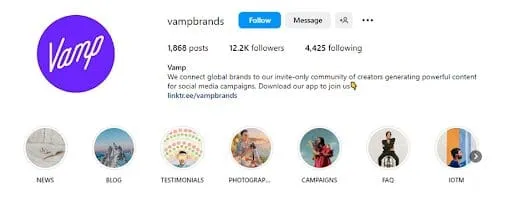
Complete your bio. Your bio is the first thing a visitor reads. Keep it clear and concise: who you are, what you do, and a reason to follow. Work in relevant keywords and a single call-to-action so the space earns its place.
-
Add a profile picture. Use something instantly recognisable. If you have a logo, use the logo; if not, choose an image tightly associated with your brand.
How do I keep my profile up to date?
Once a profile is live, it’s easy to forget and pour everything into content. But the profile is your storefront. A stale one undercuts every post you publish.
Schedule a regular review of your bio and links. Update them when products, promotions, or events change. And use Instagram Story Highlights to keep your best Stories visible beyond their 24-hour window. Organised into categories below the bio, they turn fleeting content into a permanent shelf for new visitors to browse.
What are the different types of Instagram posts?
Each format does a different job, and a varied feed keeps audiences engaged. Use as many as you can.
- Photos, the baseline. Best for showcasing products, brand moments, and behind-the-scenes content.
- Reels, short-form video, and the format Instagram pushes hardest in discovery. Strong for tutorials, demos, and reaching beyond your existing followers.
- Carousels, multiple images or videos in one swipeable post. Ideal for storytelling, step-by-steps, and education.
- Stories, casual, in-the-moment content with interactive features like polls, questions, and stickers.
Mixing formats keeps your profile fresh and helps each post reach a different slice of your audience. Whichever you choose, pair it with a keyword-rich, engaging caption, context that helps followers understand the post, especially when the image or video isn’t self-explanatory. Captions are also the natural home for a call-to-action: visit the site, subscribe, enter a giveaway.

Which Instagram features should marketers use?
A handful of native features do most of the heavy lifting for marketers:
- Instagram ads, target audiences by demographics, interests, and behaviours, and put spend behind the content that’s already working.
- Instagram Insights, performance and audience data: follower demographics, engagement rates, reach, and what each post actually earned.
- Shoppable posts, tag products directly in posts so followers can buy in a couple of taps, collapsing the distance between discovery and purchase.
- Instagram Live, real-time video for launches, Q&As, and exclusive content, useful for deepening relationships with an engaged audience.
How do I create an Instagram marketing strategy?
A strategy isn’t overwhelming when you break it into steps. Here are seven that take you from blank page to plan:
- Define your goals. Brand awareness, website traffic, lead generation, follower growth, or sales. Name the outcome before you make the content.
- Know your audience. Research the interests, demographics, and on-platform behaviour of the people you want to reach.
- Develop your brand voice and aesthetic. A consistent look and tone that aligns with your values and resonates with that audience.
- Build a content plan. Decide the formats, the posting frequency, and the themes you’ll cover.
- Plan a mix of formats. Use Reels, Stories, and carousels deliberately to add variety and extend reach.
- Decide how you’ll engage. Set out how you’ll respond to comments, messages, and mentions. Engagement is a channel, not an afterthought.
- Measure what matters. Decide upfront which metrics, engagement rate, follower growth, traffic, conversions, tell you whether the strategy is working.

How do I run an effective Instagram campaign?
A campaign is a strategy pointed at a specific outcome: a product launch, a seasonal push, a lead drive. Once your strategy is in place, the work is in the framing.
Start with timing and goals. A new product or a holiday sale gives a campaign a clear job; build the concept and audience around that. From there, develop the creative idea, decide your formats, and write copy and visuals that hold together as one concept rather than a scattering of posts.
The biggest creative decision is who fronts the work. You can star in your own content, or partner with creators who already hold the attention of the audience you want. Done well, the second route doesn’t just add reach; it borrows credibility you can’t manufacture in-house.
Once you launch, monitor performance closely. Campaigns are experiments: tracking results as they come in is how you learn what worked and apply it to the next one.
How we see it: from posts to systems
Most brands run Instagram as a series of campaigns: bursts of effort, a spike of attention, then back to the start line. The brands that compound treat it differently. They build a system: a consistent creator network, a content engine that feeds organic and paid at once, and measurement that turns every post into a learning.
Influence isn’t something you switch on for a launch. It’s infrastructure you build, and it pays back across every campaign that follows.
How do I work with influencers on Instagram?
Partnering with the right creators is one of the most effective ways to strengthen an Instagram advertising strategy. The right creator extends your reach, lends trust an ad can’t buy, and produces content that performs because their audience already wants to hear from them. Three principles to get it right:
- Match, don’t just measure. Identify creators whose audience and values align with your brand, not only the ones with the biggest following. Engagement rate and audience fit beat raw follower count.
- Agree terms clearly. Settle scope, deliverables, and compensation upfront, whether that’s a fee, product, or a longer-term arrangement. Clear terms protect the relationship.
- Co-create the content. Brief creators on your objectives, then trust them to translate it into their own voice: sponsored posts, Stories, Reels, or a mix. Content that sounds like the creator outperforms content that sounds like an ad.
For a deeper view of how creator partnerships fit a wider plan, see our guide to building an influencer marketing strategy.
How do I measure Instagram campaign results?
Once a campaign wraps, Instagram Insights is where you learn what actually happened. It shows how each post performed on engagement, reach, and impressions, and, more usefully, which content resonated and which didn’t.
Look beyond the headline numbers. Profile views and website clicks tell you whether attention turned into intent. Saves and shares tell you which content earned enough to be passed on. Together, these signals do more than score the last campaign. They shape the next one.
Instagram marketing FAQs
How do I optimise Instagram ads for maximum ROI?
Start with targeting: use Instagram’s detailed options, interests, behaviours, demographics, to reach the right segments rather than the widest one. Run A/B tests across creatives, captions, and formats to find what lands, and use Instagram Insights to track performance and adjust. Choose placements that suit your audience, and give every ad a single, clear call-to-action.
How often should I post on Instagram?
For most brands, three to five times a week keeps you visible without overwhelming followers. Consistency matters more than volume. A steady schedule of strong content beats sporadic bursts. Watch your Insights and adjust: if engagement or reach shifts, your cadence is one of the first levers to test.
How do I set a budget for Instagram campaigns?
Begin with the goal. Awareness and conversion campaigns are costed differently. Benchmark against industry cost-per-click (CPC) or cost-per-thousand-impressions (CPM) and your own past results. Start with a test budget across a few creatives and audiences, then concentrate spend on the top performers once the data tells you where the returns are.
Is Instagram marketing still worth it for brands?
Yes. But the bar has risen. With two billion-plus users, reach is abundant and relevance is scarce. The brands seeing real returns aren’t posting more; they’re building Instagram into a system that connects organic content, paid spend, and creator partnerships around a measurable outcome.
Instagram rewards systems, not stunts
Setting up a profile, posting consistently, and running the occasional campaign is table stakes. The harder, more valuable work is turning Instagram into a growth system, one where content, paid, and creators compound into relevance and performance instead of resetting with every launch.
That’s the work we do. Vamp is a tech-enabled influencer marketing agency: we design creator-led growth systems and build the measurement behind them, so attention on Instagram becomes measurable growth, not just another spike. Talk to us.