Boosting campaign posts: a creator's guide to paid amplification

Boosting is when a brand pays to extend the reach of your content beyond its organic audience, and no, it does not hurt your organic performance.
That single fear keeps a lot of creators wary of boosting. It shouldn’t. Boosting doesn’t compete with your organic reach, alter your content, or signal anything negative to the algorithm. It puts work you’ve already made in front of more of the right people, and increasingly, it’s what separates creators who land repeat brand deals from those who get overlooked.
As organic engagement keeps tightening across Instagram and TikTok, paid amplification has moved from optional to expected. Here’s how boosting actually works, why brands rely on it, and what it means for you as a creator.
The short version:
- Boosting pays to extend a post’s reach; it doesn’t replace or suppress your organic reach.
- Organic engagement has declined platform-wide. Boosting is how brands close the gap.
- Both TikTok and Instagram have stated on the record that paid promotion does not reduce organic views.
- Boosting amplifies your content as-is. It doesn’t change your message, your voice, or your authenticity.
- Creators who are easy to amplify, clean usage rights, strong content, consistent performance, get re-booked.
What is boosting, and why does it matter for creators?
Boosting is a method of promoting content beyond its organic reach by paying to increase its visibility. When a brand boosts a post, it ensures the content reaches a broader, often more precisely targeted audience than it would have reached on its own.
The practice has become common for one reason: organic reach isn’t what it used to be. As the volume of users and content has exploded, competition for attention has intensified, and platforms have tuned their algorithms to prioritise what audiences actually engage with. Standing out organically, for brands and creators alike, is harder than it was even a couple of years ago.
That’s the context every modern brief now sits inside. Boosting is the lever brands pull to make sure a collaboration performs.
Why declining organic engagement works in your favour
Many creators have watched their organic engagement rate (ER) drift downward. It’s tempting to read that as a problem. For your relationship with brands, it’s closer to an opportunity.
Because organic reach is less predictable, brands have raised their expectations for the performance of creator collaborations, and they’ve made boosting part of how they hit those numbers. When a brand can boost your content, your post no longer has to win the algorithm lottery on its own. That makes you a safer, more attractive partner, not a riskier one.
For creators, fluency in how boosting works is fast becoming the difference between landing recurring brand deals and being passed over.
Does boosting hurt your organic reach?
No. This is the most common worry creators raise, and it’s built on a misconception. You don’t have to take our word for it. The platforms have said so directly.
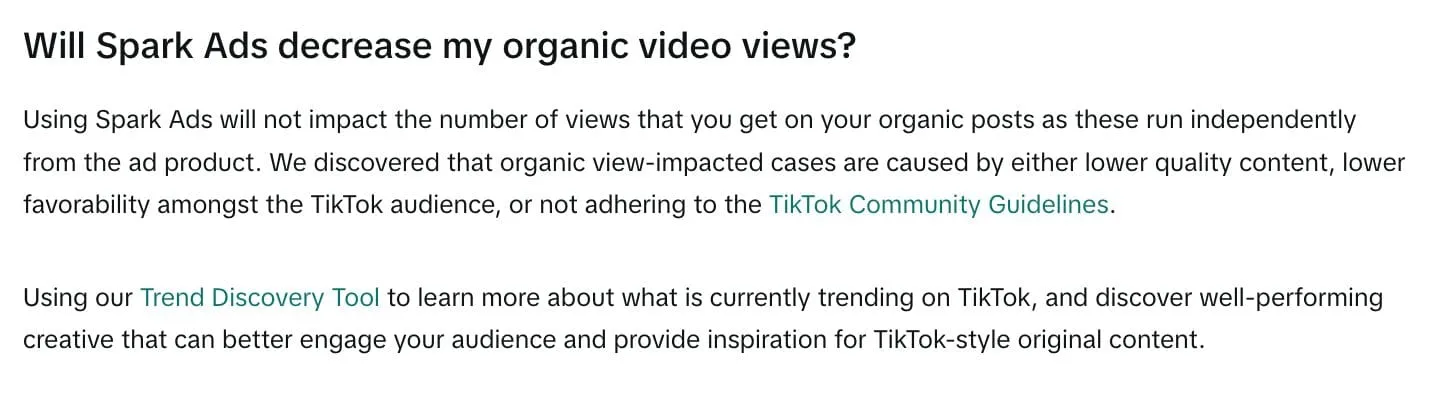
According to TikTok’s Spark Ads FAQ, boosting does not decrease the organic views of your videos. TikTok’s algorithm surfaces content that aligns with audience interests and community guidelines, whether or not that content is boosted.
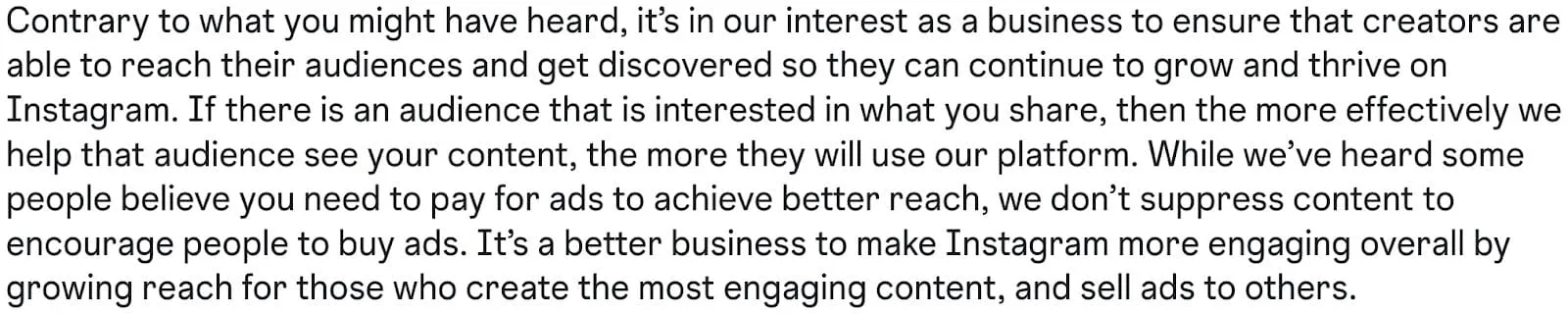
Instagram has addressed the same anxiety around “shadowbanning” and content suppression in its writing on how its ranking system works. Instagram states plainly that it does not suppress content to push creators into buying ads. The platform’s goal is to grow reach for content that resonates, boosted or not.
Credit: TikTok
Does boosting compromise your authenticity?
A second worry: that boosting lets a brand take control of your content, or makes it read as less genuine. Neither holds up.
Boosting doesn’t change your content. It amplifies it. A brand chooses to boost a post precisely because it values the content as you made it. The intent is to get that work in front of more people, not to alter its message or tone. The post your audience sees is the post you published.
Will boosting change how your followers see you?
It’s natural to wonder how an audience reads a boosted post. Some creators fear it lands as less authentic. In practice, boosting is so common across social media that most followers understand it as part of how creators work with brands.
As long as your content stays true to your voice and values, boosting tends to strengthen your connection with your audience, because it reaches more of the like-minded people who’d have wanted to find you anyway.
Credit: Meta
How the algorithms actually treat boosted content
Understanding how Instagram and TikTok rank content takes a lot of the mystery out of boosting.
How Instagram’s algorithm handles boosting
Instagram’s ranking weighs several factors when deciding what to show: engagement (likes, comments, shares), relevance, and recency. It prioritises content users are likely to engage with, but it does not suppress organic content to push creators toward ads. Boosting helps a post perform by getting it in front of the users most likely to interact with it, lifting your overall visibility on the platform rather than cannibalising it.
For a deeper breakdown, see this Hootsuite guide to the Instagram algorithm.
How TikTok’s algorithm handles boosting
TikTok’s algorithm is known for surfacing content to users based on their interests, even when they don’t follow the creator. It weighs user interactions, video information (captions, hashtags, sounds), and account settings. Boosting on TikTok, through Spark Ads, ensures your content reaches the users most likely to engage, without any negative effect on your organic reach.
For more on how the system works, see this Hootsuite guide to the TikTok algorithm.
How to make your content easy to boost (and easy to re-book)
This is where understanding boosting turns into leverage. When a brand can amplify your content cleanly and confidently, you become the creator they come back to. A few habits help:
- Keep usage rights clear. Brands boost faster when paid-media and whitelisting permissions are agreed up front, in writing.
- Make the content strong on its own. Boosting multiplies whatever it amplifies. It can’t rescue a weak post, but it compounds a great one.
- Stay on-brief without losing your voice. The content that performs when boosted is the content that still sounds like you.
- Track your own performance. Knowing what your audience responds to makes you a sharper, more bookable collaborator.
FAQs
Does boosting reduce my organic reach?
No. TikTok and Instagram have both confirmed that paid promotion doesn’t suppress organic views. Boosting adds reach on top of your organic performance. It doesn’t trade against it.
Will my followers think a boosted post is less authentic?
Most won’t notice, and most who do understand it as a normal part of brand work. As long as the content stays in your voice, boosting reaches more like-minded people rather than alienating the audience you have.
Does boosting give the brand control over my content?
No. Boosting amplifies your post exactly as published. It changes the reach, not the message. Brands boost content because they value it as it is.
Why should I care about boosting as a creator?
Because it shapes the briefs you’ll be offered. As organic reach gets harder to guarantee, brands increasingly run creator content as paid media. Creators who make that easy, strong content, clean rights, consistent results, are the ones who get re-booked.
Boosting isn’t a threat to your reach. It’s how modern collaborations perform.
Paid amplification has become a core part of how brands and creators work together, and the fears around it, lost reach, lost authenticity, lost trust, don’t survive contact with how the platforms actually operate. Understanding boosting puts you on the right side of that shift.
This is the world Vamp builds in. We’re a tech-enabled influencer marketing agency that designs creator-led growth systems for brands, which means we think about how creator content performs across organic and paid as one connected system, not two separate worlds. The creators who understand that thinking are the ones who keep getting the call.