Ten social media platforms you've never heard of before

Ten social media platforms you've never heard of, and the audiences hiding on them.
Instagram, TikTok and YouTube get all the attention. But a huge share of the world’s social activity happens somewhere else entirely, on platforms most Western marketers have never opened, used by hundreds of millions of people, often with their own creators, their own culture and far less competition for attention.
This is a tour of the ones still worth your attention in 2026, after a few much-hyped names (remember Clubhouse?) faded out of the list entirely. For each, you’ll get what it is, how it works, who’s on it and why they’re there. The platforms aren’t obscure to the people who use them daily. They’re obscure to the brands who keep spending in the same four feeds.
The short version:
- Most of these platforms are Chinese (WeChat, Douyin, QQ, Weibo, Youku, QZone, Kuaishou), because the West’s biggest networks are blocked there, and the alternatives are enormous.
- The rest (Discord, Snow) are global communities sitting outside the mainstream feed.
- Reach on a crowded platform is expensive. Relevance on the right under-indexed one is where attention is still affordable.
How we read this list
A new platform isn’t a strategy. The question that matters isn’t “which app is next”. It’s where the audience you’re trying to reach actually spends its attention, and whether you have a way to show up there credibly through the creators who already live on it. That’s the difference between chasing platforms and building influence that travels across them.
With that framing, here are the ones worth knowing.
Discord
TL;DR: More relaxed than Slack, more structured than a group chat.
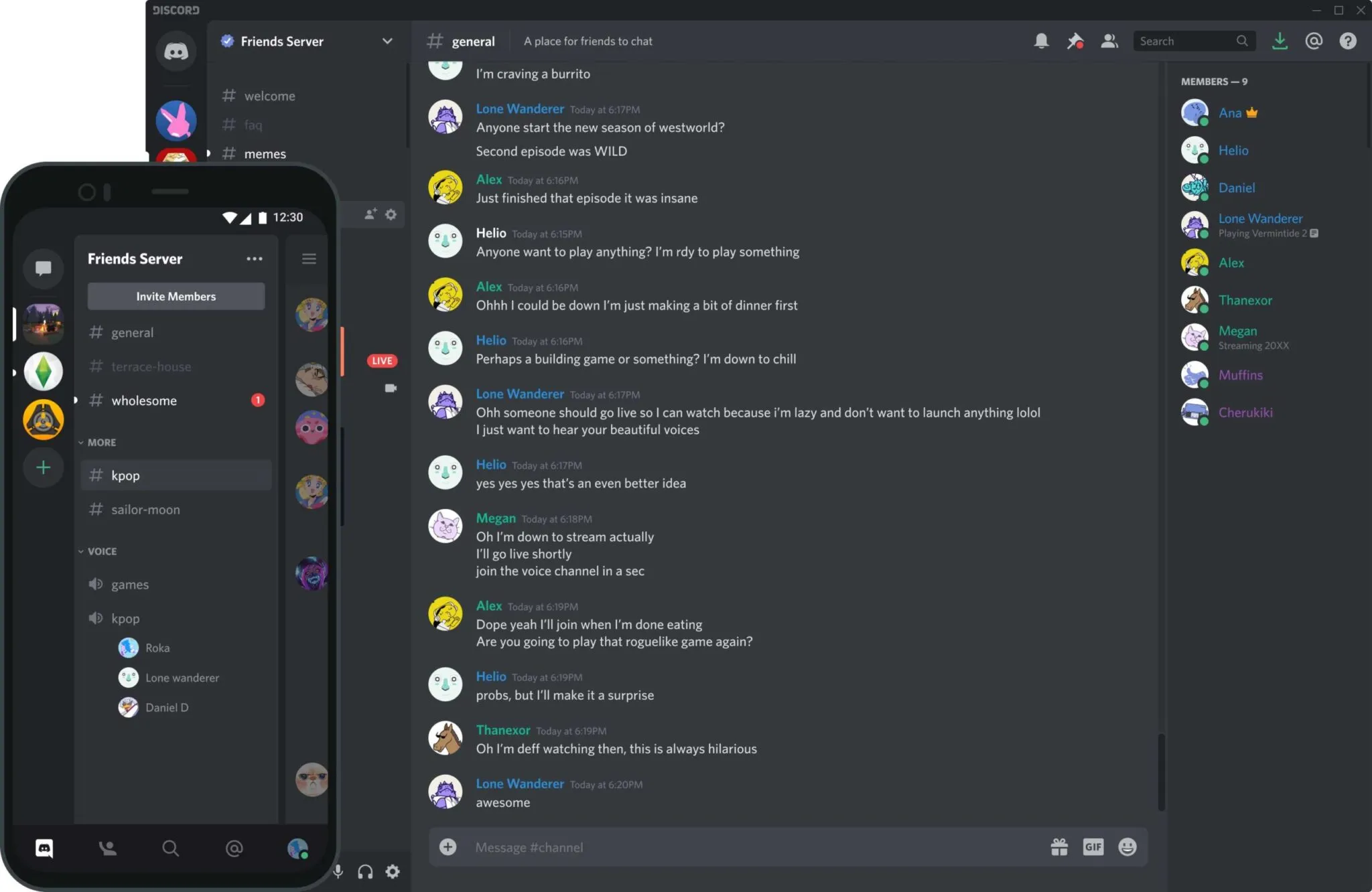
What is it? A community platform built around servers, private spaces where people talk, share and hang out. Discord started in gaming and has since become home to communities of every kind: creators, artists, traders, fandoms, hobbyists and brands.
How does it work? Each community is a “server”, organised into text and voice channels by subtopic. Members chat, drop links, share media, voice-call and DM. It’s closer to a clubhouse than a feed, persistent, conversational and identity-driven rather than algorithmic.
Who uses it? Discord reported around 150 million monthly active users as it expanded well beyond gaming into mainstream community building. Creators increasingly run their inner-circle audiences here.
Why do people use it? Belonging. Discord is where a fragmented internet finds its people, communities organised around shared interest rather than broadcast reach. For brands, it’s one of the few places you build genuine membership, not just impressions.
TL;DR: Not a messaging app. An operating system for daily life in China.
What is it? China’s dominant super-app. Messaging is only the entry point. Users video call, pay with WeChat Pay, shop, book rideshares, access government services and post to a Stories-style feed called “Moments”. For most of China, WeChat is the internet.
How does it work? Onboarding is deliberately gated. New accounts often need an existing user to verify them. Once in, the platform’s “mini-programs” let users do almost everything without leaving the app.
Who uses it? WeChat has surpassed 1.3 billion monthly active users, making it one of the largest platforms on earth. It’s effectively universal among Chinese consumers and the Chinese diaspora.
Why do people use it? Because everything lives there. With Western platforms blocked in China, WeChat became the default for both social life and business, reportedly the primary work-communication tool for a large share of Chinese professionals, ahead of email.
Snow
TL;DR: Quick flicks and disappearing chats, Snapchat’s South Korean answer.
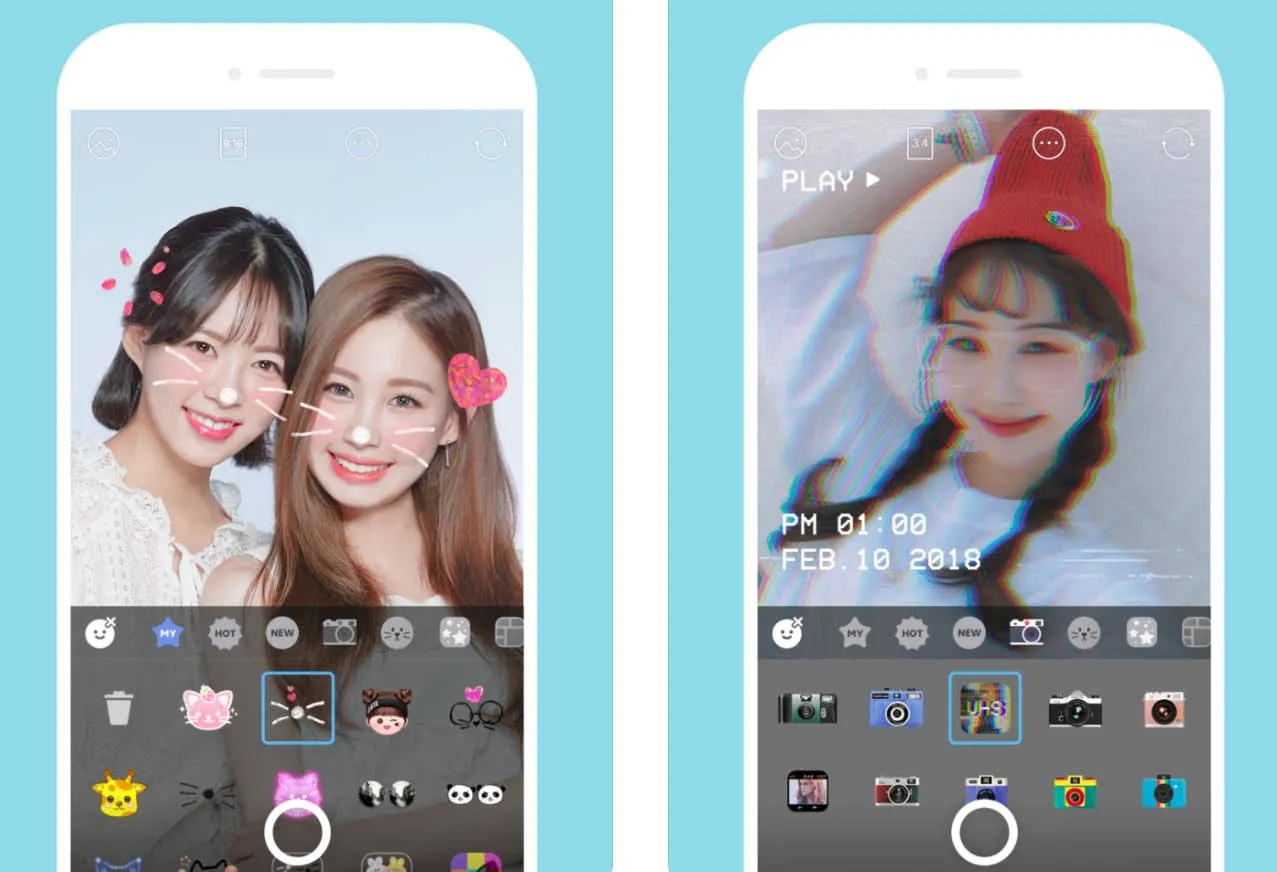
What is it? A camera-first social app from South Korea, often described as a regional take on Snapchat. Users apply filters and AR effects, capture photos and video, and send them straight to friends, with a Stories feature and built-in chat.
How does it work? Snow leans into its camera: a deep library of filters and effects, a Boomerang-style GIF maker, and Stories that linger longer than Snapchat’s 24 hours. Its messaging is more forgiving too, holding messages rather than vanishing them on open.
Who uses it? Snow built a large user base across Asia, passing 200 million downloads as a popular alternative to mainstream Western camera apps.
Why do people use it? With Snapchat blocked in China and less established across parts of Asia, Snow fills the gap, and many users simply prefer its filters and messaging.
Douyin
TL;DR: TikTok’s older, more advanced Chinese sibling.
What is it? Douyin is the original TikTok. Both come from the same company, ByteDance. Douyin built for China, TikTok for everywhere else. They look almost identical but evolve separately.
How does it work? Same core loop: an algorithmic feed of short video set to audio. Douyin tends to ship features first, including stronger in-video search and far deeper native commerce. Livestream shopping is a mature, multi-billion-dollar behaviour on Douyin.
Who uses it? Douyin reached over 600 million daily active users, overwhelmingly inside China.
Why do people use it? TikTok isn’t available in China, so Douyin is where the short-video habit, and an enormous social-commerce economy, actually lives.
TL;DR: China’s original social network, still going.
What is it? Launched in 1999, QQ was one of China’s first mass social platforms, instant messaging plus social posting at a time when that felt revolutionary. It’s still here, decades on.
How does it work? QQ now spans messaging, social posting, gaming, music and shopping, a broad suite that overlaps with much of what Facebook does, plus a heavy gaming and entertainment lean that skews younger.
Who uses it? QQ remains a fixture of Chinese digital life, drawing hundreds of millions of monthly active users across Gen Z, millennials and older generations alike, per parent company Tencent.
Why do people use it? Once China’s biggest network, QQ now sits alongside WeChat: WeChat is the everyday “social” platform, while QQ holds on through gaming, entertainment and a loyal younger base.
Sina Weibo
TL;DR: China’s microblogging giant. Think X, at vast scale.
What is it? A microblogging platform comparable to X (formerly Twitter), and one of China’s most influential public conversations. It’s where news breaks, trends form and celebrity culture plays out.
How does it work? Short posts, images, reshares and threaded replies, organised around trending topics. Weibo’s “hot search” rankings function as a real-time barometer of what China is talking about.
Who uses it? Weibo has reported well over 500 million monthly active users, skewing younger, and is one of China’s largest platforms after WeChat.
Why do people use it? It’s the public square: news, opinion, fandom and celebrity all in one feed. For brands, it’s where cultural relevance in China is won or lost in the open.

Youku
TL;DR: China’s long-form video giant.
What is it? A major Chinese video-sharing and streaming platform, often likened to YouTube, but with a heavier streaming dimension, carrying licensed film, TV, documentary and animation alongside user uploads. It’s owned by Alibaba.
How does it work? Users upload and watch video much like YouTube, but Youku also operates as a streaming service for professional and licensed content, blurring the line between UGC platform and Netflix-style catalogue.
Who uses it? Youku has counted hundreds of millions of monthly mobile users, making it one of the default destinations for video in China.
Why do people use it? China’s content rules mean only approved video circulates, and YouTube is blocked. Youku operates inside those rules, so for the Chinese market, it’s a primary place to watch.
QZone
TL;DR: China’s answer to early MySpace and Bebo, with serious staying power.
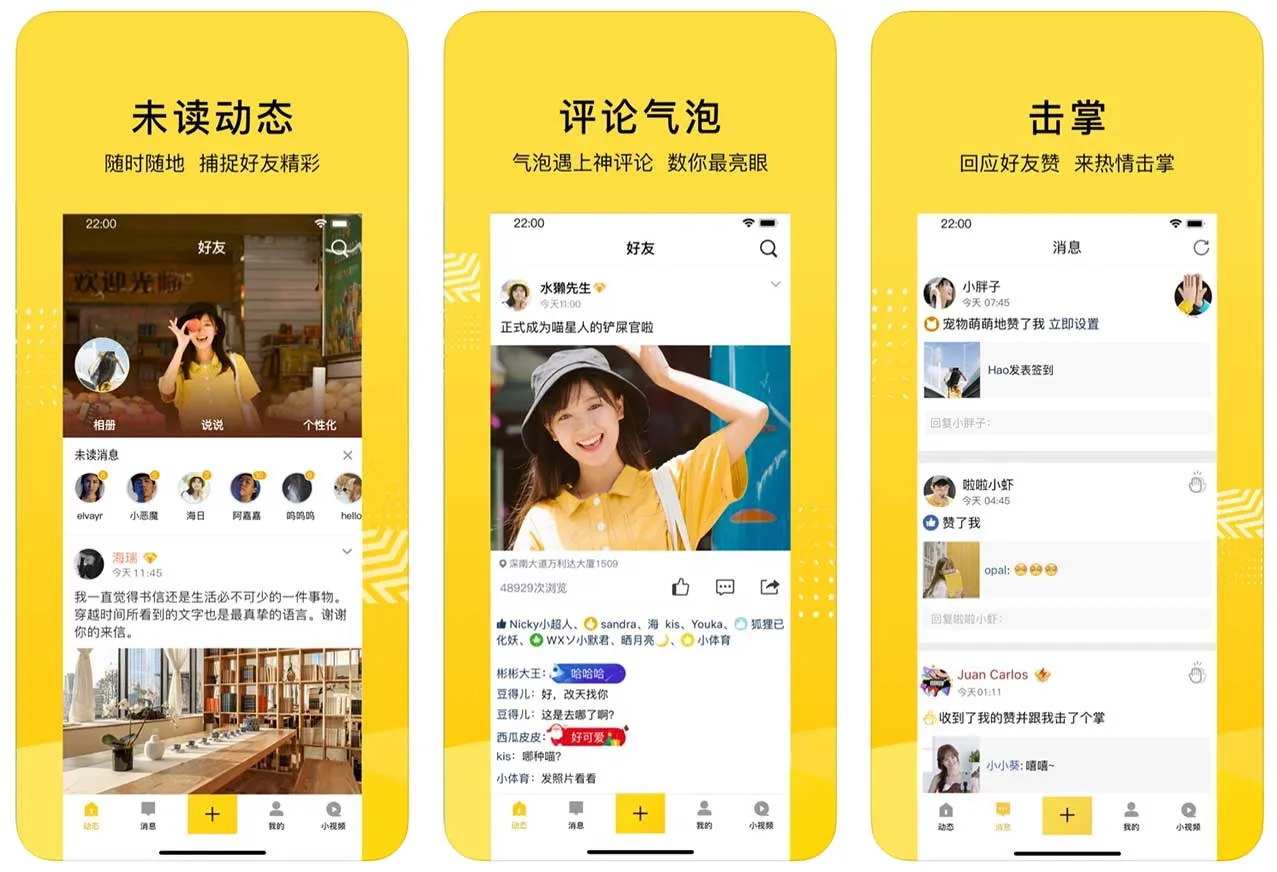
What is it? A social platform built around personal expression: posts, journals, photo albums and customisable profile “skins”, in the spirit of the early-2000s social web. Another Tencent property, tightly linked to QQ.
How does it work? Microblogging, gaming and social sharing, with heavy customisation of your own space. QZone draws much of its traffic from QQ, where posts are cross-linked between the two.
Who uses it? QZone has reached into the hundreds of millions of users, with a broad, predominantly Chinese audience.
Why do people use it? With Western platforms blocked, QZone carved out space as a more relaxed, low-key network for self-expression, and a generation of Chinese users grew up on it.
Kuaishou (a.k.a. Kwai)
TL;DR: Douyin’s biggest rival, built on everyday creators, not just stars.
What is it? A short-video platform and Douyin’s main domestic competitor. Where Douyin can feel top-down and polished, Kuaishou built its identity around ordinary users and “real life”, giving smaller creators unusually strong reach.
How does it work? Users upload short videos set to trending audio, in a real-time network designed for sharing everyday moments. Its feed historically distributed attention more evenly than Douyin’s, rewarding breadth over a handful of mega-creators.
Who uses it? Kuaishou (Kwai internationally) commands hundreds of millions of users, with deep roots beyond China’s biggest cities and a fast-growing presence in markets like Brazil and Indonesia.
Why do people use it? It was one of China’s first short-video platforms and built a loyal community around authenticity and accessibility, plus a mature livestream-commerce economy that turns attention into sales.
What this list is really telling you
The pattern isn’t a list of random apps. It’s a map of where attention has fragmented, into regional super-apps, gated communities and short-video economies that the West’s four big feeds never touch. Most “untapped reach” isn’t a new feature on a platform you already use. It’s a platform you’ve never opened, full of creators you’ve never briefed.
Knowing the platforms exist is the easy part. The harder, more valuable problem is showing up on the right ones with the right creators, in a way that compounds instead of scattering spend across a dozen feeds.
That’s the work we do. Vamp is a tech-enabled influencer marketing agency: we design creator-led growth systems, the platforms, the creators, the content and the measurement, so a brand’s influence performs across the channels that matter, not just the obvious ones. Talk to us.
FAQs
Which “unknown” social media platforms are biggest?
By raw scale, the Chinese platforms dominate: WeChat (over 1.3 billion monthly users), Douyin (600 million-plus daily), Weibo and QQ (each in the hundreds of millions). Globally, Discord is the largest community-led platform outside the mainstream feed.
Why are so many of these platforms Chinese?
Because Western networks, Facebook, Instagram, YouTube, X, Snapchat, are largely blocked in China. That created room for homegrown alternatives to grow to enormous scale, often with features and commerce behaviours years ahead of their Western equivalents.
Should my brand actually be on these platforms?
Only where your audience is. The point isn’t to be everywhere; it’s to be relevant in the places that matter to your market, which, for any brand with reach into China or globally fragmented communities, often means platforms outside the obvious four.