What is Emu Video and Emu Edit? Meta's AI tools explained

Emu Video and Emu Edit are Meta's AI research tools for generating video from text and editing images with written instructions.
Emu Video turns a text prompt into a short, high-quality clip. Emu Edit changes an existing image from a plain-language instruction, “remove the background”, “make the sky blue”, without touching the pixels you didn’t ask it to. Both came out of Meta AI Research, were released as research in late 2023, and have since fed into Meta’s wider generative-video and editing work rather than shipping as standalone consumer apps.
This guide covers what each tool is, how it works under the hood, and what it actually means for marketers and creators producing content at pace.
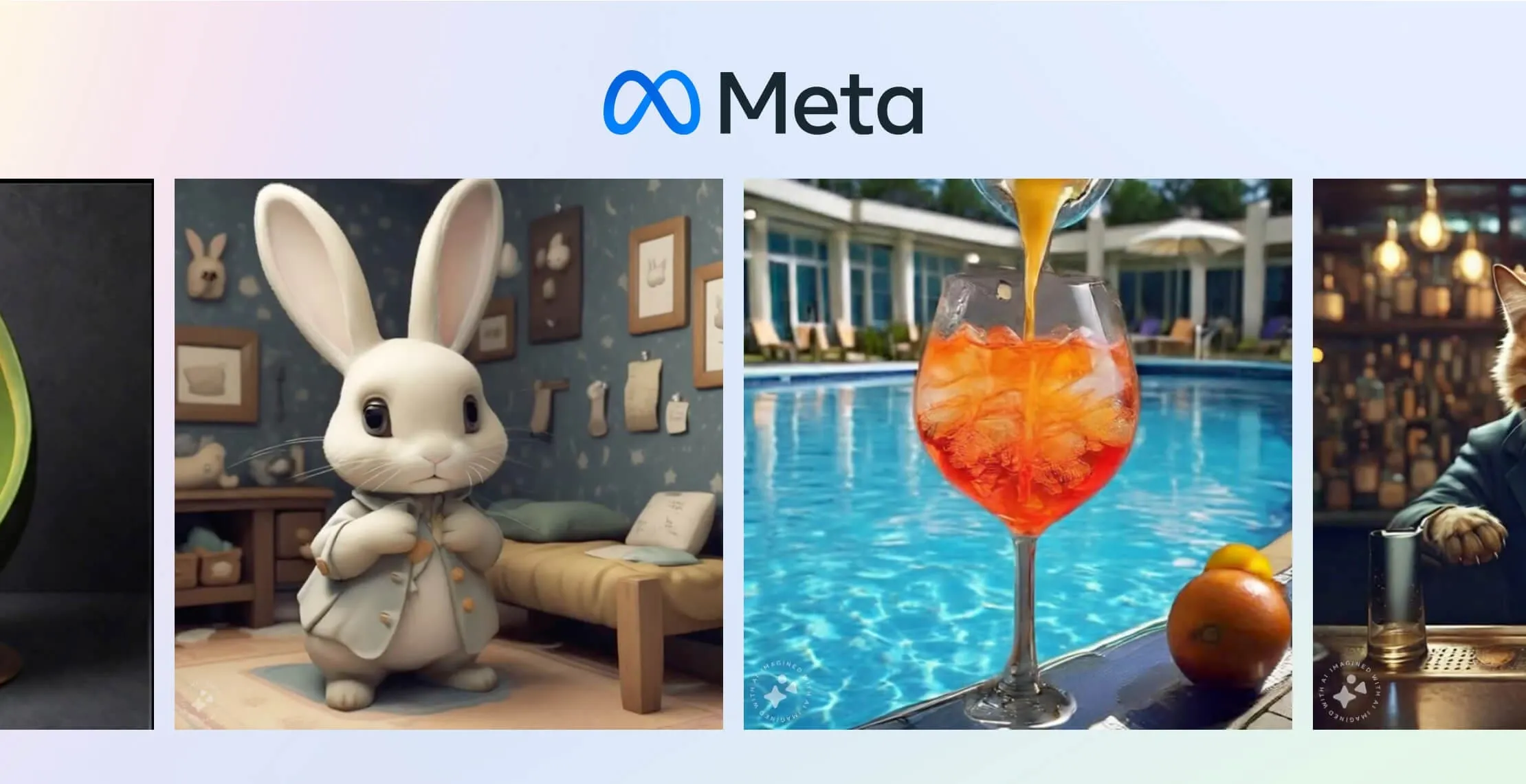
Credit: Meta
The short version:
- Emu Video generates short videos from a text prompt using a two-step diffusion process: first an image, then a clip built from that image and the prompt.
- Emu Edit performs precise, instruction-based image editing, altering only the pixels relevant to the request.
- Both are built on Meta’s Emu foundation model, pre-trained on over one billion image-text pairs.
- They were research releases, not finished products, but the capability they demonstrate is now standard across Meta’s creative tooling.
What is Emu Video?
Emu Video is a text-to-video generation model built on diffusion. Using Meta’s Emu foundation model, it produces visually distinct, high-quality clips through a two-step process.
First, it generates an image conditioned on a text prompt. Then it generates video conditioned on both the text and that generated image. This factorised approach makes generation efficient: just two diffusion models produce 512×512, four-second clips at 16 frames per second. In Meta’s own evaluations, users preferred its output over earlier models for both quality and faithfulness to the prompt.
How does Emu Video work?
The two-step, or “factorised”, method is what sets Emu Video apart from earlier systems like Make-A-Video. Rather than generating motion directly from text, it generates a strong still image first, then animates from that anchor.
Splitting the problem in two does two things. It keeps the output faithful to the prompt, the image stage locks in the subject before motion is added, and it keeps the process efficient, since each model has a narrower job. The result is the 512×512, four-second, 16fps clip, generated from a single text input.
What is Emu Edit?
Emu Edit is Meta’s instruction-based image editing model. Instead of manual masking and layer work, you describe the change in words and the model makes it.
Its defining trait is precision. Emu Edit treats computer-vision tasks, background removal, colour and geometry transformations, local and global edits, as instructions, and follows them tightly enough that only the pixels relevant to the request are altered. Everything else stays intact, which preserves the authenticity of the original image. It was trained on ten million synthesised samples, the largest dataset of its kind at the time, and outperformed comparable models on both instruction faithfulness and image quality.
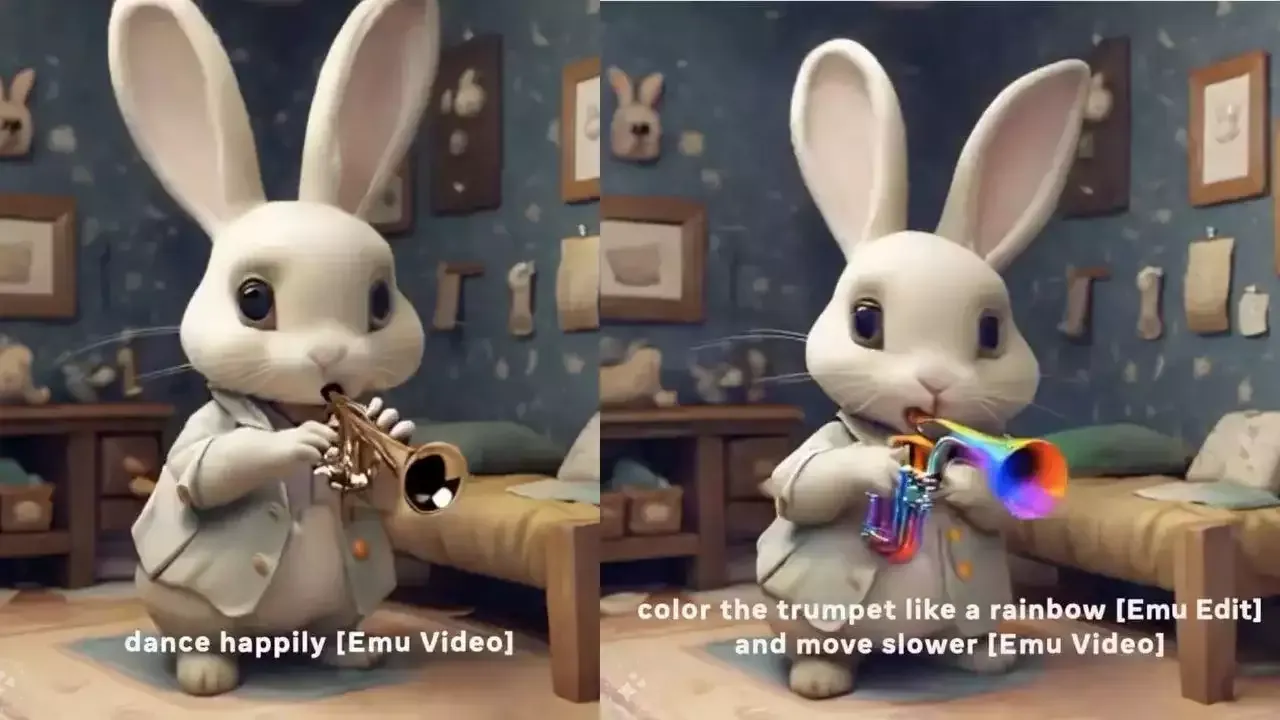
Credit: Meta
How can Emu Video and Emu Edit help marketers?
For marketers, the appeal is speed without a production bottleneck. A text prompt becomes a usable asset in seconds; an image gets edited with a sentence instead of a brief to a designer. That compresses the distance between an idea and something you can test on a feed.
The honest read: tools like these are excellent at volume, variation and first drafts. They are not a substitute for craft, brand consistency or a point of view. They lower the cost of making content. They do nothing, on their own, about whether that content is the right content, distributed to the right audiences, in service of a measurable outcome.
That gap is the part worth getting right.
How can Emu Video and Emu Edit help creators?
For creators, the value is in iteration. Generating concept frames, animating a still, refining an image, swapping a background. These are the fiddly, time-consuming steps between an idea and a finished post. Automating them frees creators to focus on the craft and the judgement that the model can’t replicate.
It is worth being clear-eyed about the ceiling. Generative tools empower individuals, from art directors testing concepts to creators sharpening their reels, but they don’t replace taste, originality or the relationship a creator has with their audience. The model makes the asset. The creator still makes it matter.

Credit: Forbes
Where Emu fits in the generative AI landscape
Both tools share a backbone: Meta AI Research’s Emu foundation model, pre-trained on over one billion image-text pairs and fine-tuned on a curated set of high-quality images. That shared foundation is why Emu Video and Emu Edit feel like two expressions of one capability rather than two separate products.
Emu Video applies it to motion through its factorised, two-step approach. Emu Edit applies it to precise, instruction-driven editing. Together they sketch a near-future where generating an animated sticker, editing a photo, or adding flair to a post takes a sentence and no specialist skill, a direction Meta’s broader creative tooling has continued to move in since.
How we see it
The story here isn’t “AI makes content easier”. Easier content is the least interesting consequence of this shift.
The real consequence is that the cost of creation collapses, and when creation gets cheap, the scarce thing becomes everything around it: the strategy that decides what to make, the creators who give it credibility, the distribution that puts it in front of the right people, and the measurement that proves it worked. It is also why AI content and creators are worth thinking about as one question: when the making is free, the first-hand human perspective behind it is what is left to compete on. A model can generate a thousand clips. It can’t tell you which one earns attention, or what to do next when it does.
That’s the part we build. Vamp is a tech-enabled influencer marketing agency: we design creator-led growth systems and run the infrastructure behind them, so the content, however it’s made, turns into measurable growth rather than more noise. If AI is collapsing your production cost and you want it to compound into something that performs, talk to us.
FAQs
Can I use Emu Video and Emu Edit right now?
They were released as research, not consumer products, so there’s no standalone app to open. The capability they pioneered, text-to-video and instruction-based editing, has since become widely available across Meta’s creative tools and the broader generative-AI market.
What’s the difference between Emu Video and Emu Edit?
Emu Video generates new video from a text prompt. Emu Edit modifies an existing image from a written instruction, changing only the pixels you asked it to. Both run on the same Emu foundation model.
Will AI video tools replace creators and designers?
No. They lower the cost of producing assets, which is a real advantage for volume and iteration. They don’t replace taste, brand judgement, original ideas, or the audience trust a creator builds, the things that decide whether content actually performs.