How Russell & Bromley drove conversions through creator creativity
To launch its Spring collection, Russell & Bromley partnered with Vamp and 21 creators: 25.2k click-throughs, 22x benchmark engagement and a CPC 2.4x cheaper.
- 25.2k
- users clicked through to site
- 22x
- higher engagement rate than industry benchmarks on boosted content
- £0.22
- paid CPC, 2.4x cheaper than the industry benchmark
- 21
- creators activated on a deliberately loose brief
Russell & Bromley needed its Spring collection to drive demand, not just impressions. Vamp engineered a creator-led system that turned content into intent: 25.2k users clicked through to site at a cost-per-click well below industry benchmarks.
The heritage footwear and accessories brand handed creative control to a squad of 21 Vamp creators, then let paid media do the compounding. The content resonated with the target 25-34 audience, and strong engagement converted into measurable intent, the most cost-effective CPM and CPE Vamp had delivered across any campaign to that point.
The takeaways:
- A deliberately loose brief gave 21 creators room to interpret the collection in their own visual language, producing 45 diverse, native assets.
- Top-performing organic content was repurposed as paid media, driving engagement rates 22x higher than industry benchmarks.
- The 25-34 demographic generated 66% of engagements and 55% of link clicks to site.
- Paid CPC landed at £0.22, 2.4x cheaper than the industry benchmark.
The challenge: turning a Spring launch into demand
Russell & Bromley wanted to showcase its new Spring collection of footwear and accessories, and, crucially, move beyond awareness into website traffic and purchase intent.
The risk with a launch like this is the familiar one: lots of polished content, plenty of reach, very little downstream impact. Visibility is easy to buy. Demand is harder. The brand needed influence that performed at the bottom of the funnel, not just appeared at the top.
The shift: from campaign to creator-led system
Most brands treat a launch as a burst of activity. We treated it as a system, one designed to generate content, distribution and performance from the same investment.
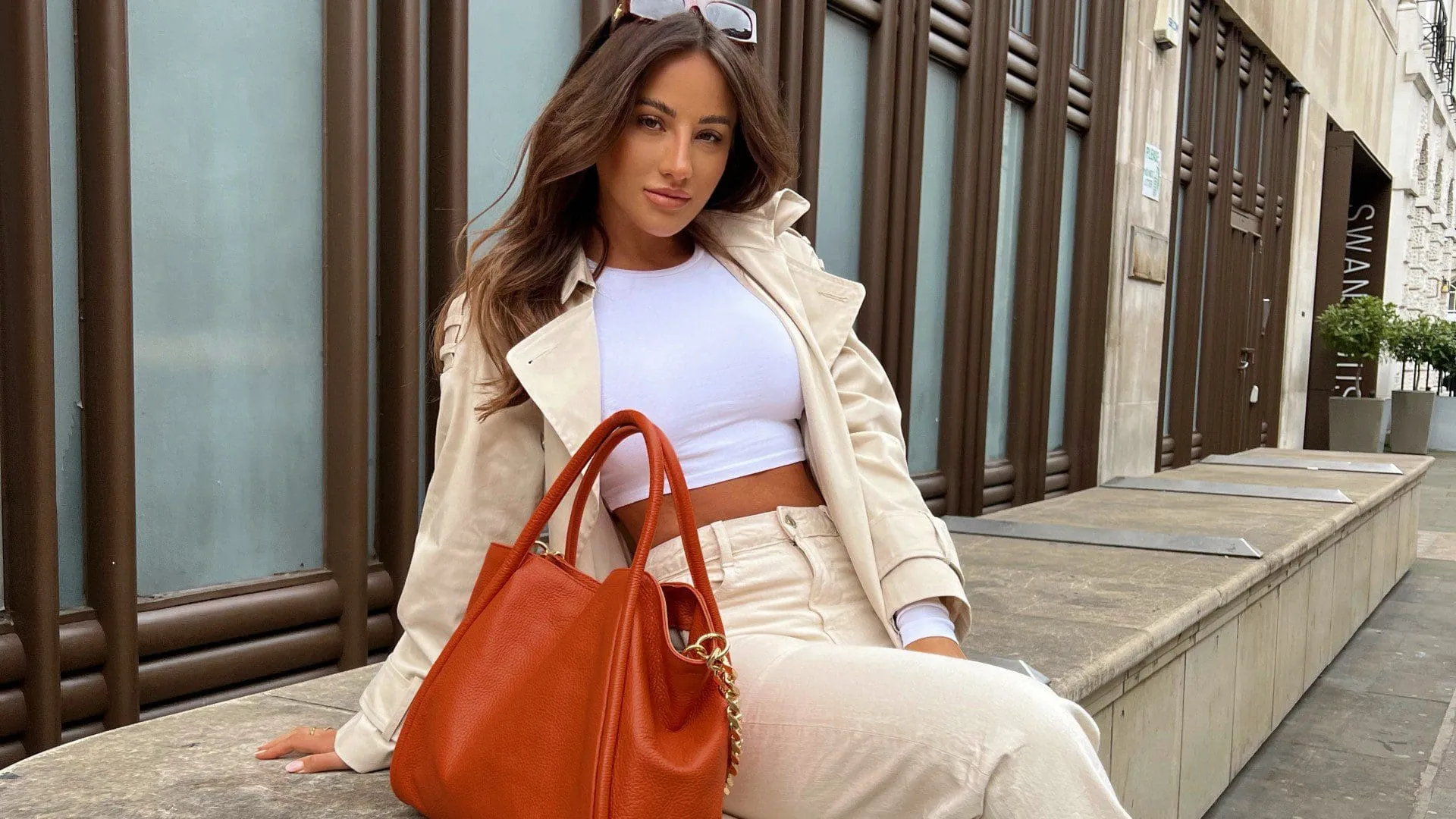
That meant a deliberately loose brief. Rather than dictating products and shots, Vamp recruited a diverse squad of 21 creators and gave them the freedom to choose pieces that fit the style and aesthetic of their feeds. Self-expression was the point: it produced a spread of formats, styles and creative approaches that read as native, not advertised.
The second layer was where the system compounded. Paid performance wasn’t an afterthought bolted on at the end. It was structural. High-impact organic content was repurposed for paid media to retarget lookalike audiences, nurturing interest and converting engagement into intent on the brand’s site.
What we did
- Built a diverse creator squad. Twenty-one creators, each chosen to bring a distinct aesthetic and audience, briefed loosely so the collection showed up in 45 different creative registers.
- Engineered for downstream intent. The strategy shifted toward top-to-mid-funnel objectives, prioritising the metrics that predict purchase over the ones that only flatter a report.
- Turned the best organic into paid fuel. Top-performing content was boosted to lookalike audiences, extending reach and efficiency well past what organic alone could deliver.
The outcome: the most cost-effective campaign to date
Refocusing on top-to-mid-funnel objectives produced the most cost-effective CPM and CPE Vamp had achieved across all campaigns at the time.
Top-performing organic content, repurposed as boosted media, drove engagement rates 22x higher than industry benchmarks. The target 25-34 audience generated 66% of engagements and 55% of link clicks to the Russell & Bromley website. And 25.2k users clicked through to site at a CPC of £0.22, 2.4x cheaper than the industry benchmark.
Organic
- Creators: 21
- Content pieces: 45
- Impressions: 452k
- Reach: 408k
- Engagements: 29.8k
- Engagement rate: 14.3%
Paid-media boosting
- Impressions: 1.9M
- Unique reach: 721.4k
- Engagements: 63.3k
- Engagement rate: 8.8% (22x higher than industry benchmark)
- CPC: £0.22 (2.4x cheaper than industry benchmark)
What made it work
Flexible product choice
Giving creators the freedom to express themselves was the engine of this campaign. The brand treated creators as individuals, recognising that not every product in the lookbook would suit a given creator’s aesthetic.
The freedom to choose product placements made the content far more likely to resonate with each creator’s audience, while still holding together as a coherent ‘look’ across the squad.
A spread of formats
The strongest influence work comes from content cross-over, different creators working in different formats. Recruit a collective and each creator brings their own creative strengths, showcasing the brand in their own discipline.
For the brand, that means a spread of assets that keep the work fresh and dynamic, plus the ability to test different formats across different channels, instead of one execution stretched thin.
Extracting more value from creator content
Creator content drives better engagement than branded posts. Creators know their audiences and activate content on their channels better than anyone.
When that content performs, the way to extract more value from the investment is to amplify it on paid channels, which is exactly the move that turned strong organic engagement into 25.2k clicks at a benchmark-beating CPC.
What’s next
Knowing creator content converts is the easy part. Engineering the system that turns it into sustained, measurable demand, the loose brief, the creator mix, the paid layer that compounds it, is the harder, more valuable work, and it’s the work we do.
Vamp is a tech-enabled influencer marketing agency. We design creator-led growth systems and build the performance engine behind them, so influence becomes measurable growth rather than a one-off spike. Talk to us.
FAQs
What did Russell & Bromley achieve with Vamp?
Working with 21 Vamp creators, Russell & Bromley drove 25.2k click-throughs to site for its Spring collection at a CPC of £0.22, 2.4x cheaper than the industry benchmark, with boosted content delivering engagement 22x higher than industry benchmarks.
Why was the brief kept loose?
Giving creators freedom to choose products and formats made the content more native to each audience. That flexibility produced 45 diverse assets and the cross-over of styles and formats that kept the work fresh and effective.
How did paid media fit into the strategy?
Top-performing organic content was repurposed as paid media and retargeted to lookalike audiences. This is where the system compounded, converting organic engagement into purchase intent and delivering Vamp’s most cost-effective CPM and CPE to that date.